
Did you know that nearly 40 percent of people struggle to find space for their belongings at home? Organizing your storage is not just about squeezing things into boxes, but about saving time, money, and stress down the road. Whether you are downsizing, moving, or simply trying to reclaim your living space, mastering the right storage strategies can make all the difference. With a few key steps, even the most cluttered home can feel open and manageable.
Quick Summary
| Key Point | Explanation |
| 1. Prioritize items for storage | Evaluate belongings based on usefulness, sentiment, and practicality to determine what truly needs storage. |
| 2. Thoroughly clean containers | Sanitize storage containers before use to prevent moisture and pest issues, ensuring a safe environment for your items. |
| 3. Categorize belongings strategically | Group items by function or room to simplify the unpacking process and enhance organization during storage. |
| 4. Pack efficiently to save space | Use uniform containers and ensure stable weight distribution; fill gaps with soft materials for added protection. |
| 5. Label everything clearly | Use descriptive labels and create an inventory list to easily identify items, making retrieval simpler in the future. |
Table of Contents
Step 1: Assess storage needs and inventory items
Before you start packing everything in sight, take a moment to thoughtfully evaluate what actually needs storage. This step is about being strategic with your space and your stuff.
Start by walking through your home and making critical decisions about each item. According to research from moving experts, you want to consider three key factors: usefulness, sentimental value, and practical importance. Not everything deserves a spot in your storage container.
Begin by sorting your belongings into clear categories: keep, donate, sell, and discard. Portable storage pods work best when you minimize unnecessary items. As research from Victory Van suggests, decluttering before storage can significantly simplify your moving and unpacking process.
Create a comprehensive inventory list that serves two crucial purposes: it helps you track what you own and provides a reference guide for your future self. Pro tip write this list in detail. Include descriptions, estimated value, and quantity for each item. Store a physical copy inside your storage container and keep a digital backup on your phone or computer.
Here’s a helpful overview of how to inventory your items for storage:
| Inventory Step | What to Include | Why It Matters |
| Detailed Descriptions | Item name Brand/model Physical details |
Identifies specific items |
| Estimated Value | Dollar amount Purchase year |
Supports insurance claims |
| Quantity | Number of each item | Tracks total belongings |
| Special Handling | “Fragile”, “Needs padding” “Climate control” |
Ensures safe storage |
| Digital & Physical Copy | List on phone/computer Printed in container |
Backup for reference |
Pay special attention to fragile or valuable items. These might require extra protection or special storage considerations. Quick rule of thumb if an item would break your heart or bank account to replace think twice about how you pack and store it.
Once you have your inventory and decisions made, you are ready for the next exciting step of preparing your items for storage. Your future self will thank you for this careful preparation.
Step 2: Clean and prepare storage containers
Before loading your precious belongings into storage, you need a spotless environment that protects against potential damage. Think of this step as creating a fortress of cleanliness for your items.
According to moving experts, cleaning is more than just a quick wipe down. You want to thoroughly sanitize every surface and container to prevent moisture, dirt, and potential pest invasions. Start by gathering your cleaning supplies soap, disinfectant, clean cloths, and a vacuum.
Begin with your storage containers. Opt for new or thoroughly cleaned plastic bins with tight sealing lids. As research from The Chicago Green Box suggests, sanitizing plastic bins with soap and disinfectant is crucial. Scrub every surface, paying extra attention to corners and edges where grime likes to hide. Once cleaned, let the containers dry completely to prevent any mold growth.
For your actual belongings, vacuum and wipe down each item before packing. How to Protect Furniture in Storage can provide additional guidance on preparing specific items. Special care matters most for electronics, furniture, and delicate objects.
Pro tip clean from top to bottom and always use clean packing materials to avoid introducing dirt into your freshly sanitized containers.
Moisture is your enemy in storage. Consider using silica gel packets or moisture absorbers inside containers to keep everything dry. These small additions can make a massive difference in preserving your items condition.
With clean containers and carefully prepared items, you are now ready to start the strategic packing process. Your future self will appreciate the extra effort you are putting in right now.
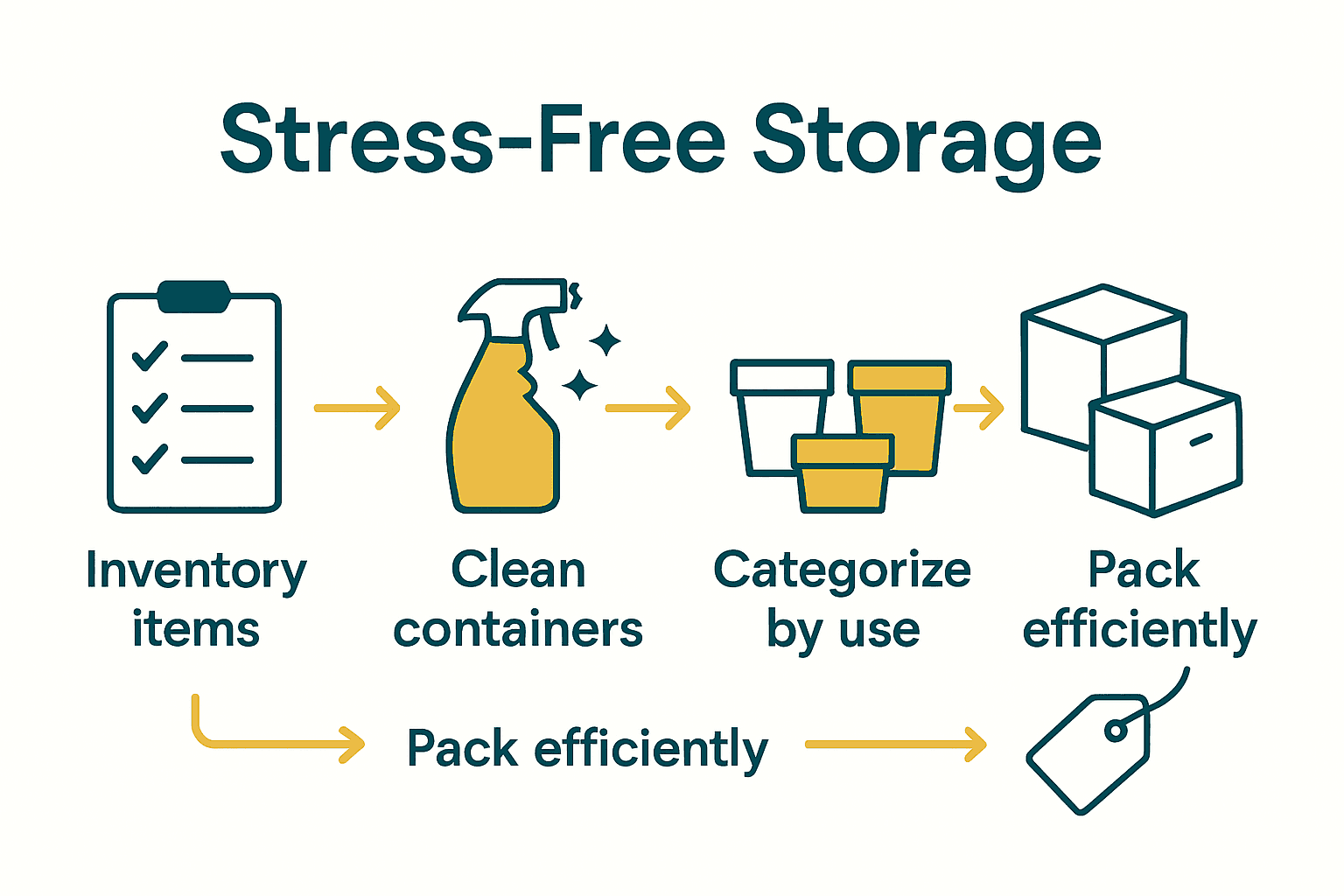
Step 3: Sort and categorize belongings by use
Sorting your belongings is like creating a strategic roadmap for your storage journey. This step transforms chaos into organized efficiency and makes future unpacking a breeze.
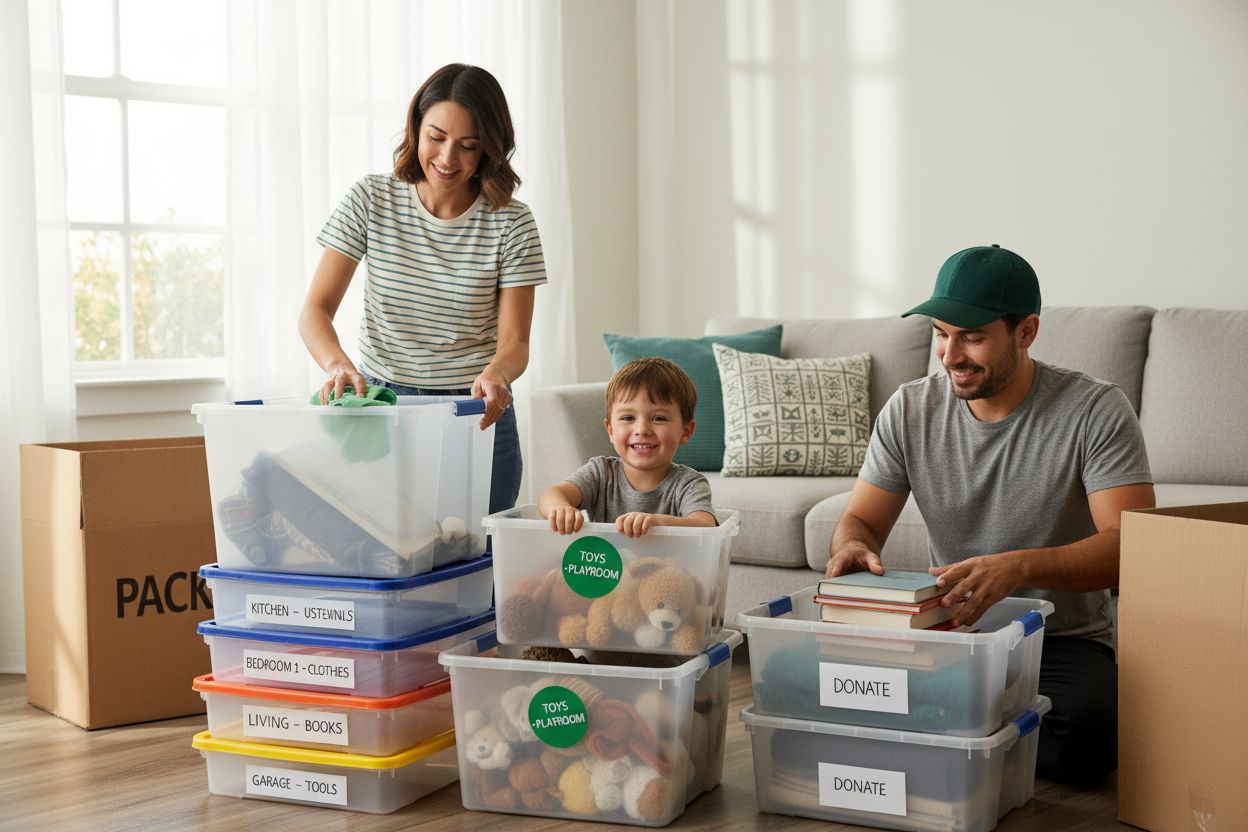
Begin by establishing clear categories that make sense for your specific situation. According to moving experts, grouping items by room or functional use works best. Think kitchen items together, bedroom linens in one set of containers, tools in another. How to Pack Kitchenware can help you understand specific nuances for delicate items like dishes and cookware.
Choose transparent plastic bins for maximum visibility. Being able to see contents without opening every container saves tremendous time and reduces frustration. Pro tip create a detailed inventory list for each container as you pack. Write the contents on a piece of paper and tape it inside the lid or use removable labels that wont damage your containers.
Consider weight distribution when categorizing. Heavy items like books or tools should go in smaller containers to prevent overloading. Lighter items like linens or seasonal clothing can fill larger bins. This approach protects both your items and your back during loading and unloading.
Important tip always keep frequently needed or potentially valuable items easily accessible. Think about what you might need quickly and pack those items last or in a clearly marked container.
By thoughtfully sorting your belongings now, you are setting yourself up for a smooth storage and moving experience.
 Your future self will thank you for this moment of organizational zen.
Step 4: Pack items efficiently to maximize space
Packing a storage container is like solving a three-dimensional puzzle where every inch of space counts. Your goal is to protect your belongings while making the most of available room.
Start by selecting uniform sturdy containers that stack easily. According to storage experts, container consistency is key to maximizing vertical space. Essential Moving Packing Supplies List can help you select the right materials for your specific needs.
Think strategically about weight distribution. Heavy items like books and tools should go in smaller containers at the bottom. Lighter items like clothing and linens can fill larger bins or go on top. This approach prevents crushing delicate items and creates a stable storage structure.
Utilize every possible space. Fill gaps between items with soft materials like towels or bubble wrap. Vacuum sealed bags are perfect for compressing clothing and bedding. Disassemble bulky furniture to create more compact storage configurations. Remove table legs, take apart bed frames and store components together.
Pro tip label everything and create a detailed inventory. Knowing exactly what goes where saves tremendous time and frustration later.
Place frequently accessed items near the container entrance. This small planning step can save you from digging through multiple boxes when you need something quickly. Think about what youll potentially need during storage and pack accordingly.
With careful packing and strategic organization, you are transforming a simple storage container into a perfectly orchestrated space-saving solution.
Step 5: Label and document container contents
Labeling might seem like a small step, but it is the secret weapon of stress free storage and future you will be incredibly grateful for this moment of organization. Think of it as creating a roadmap for your belongings.
According to moving experts, clarity is everything when it comes to labeling. Use specific descriptive terms that instantly communicate what is inside. Instead of writing “kitchen stuff” write “ceramic dinner plates” or “baking tools.” Protecting Furniture in Storage and Moving recommends using large clear lettering that can be read from several feet away.
Consider using a color coded system to make identification even easier. Blue might represent bedroom items, green for kitchen, red for important documents. Pair your color system with detailed written labels to create an intuitive organization method. Use waterproof markers or printed labels that wont fade or smudge during storage.
Create a digital and physical master inventory list. Take photos of container contents before sealing them. This provides an extra layer of documentation that can be incredibly helpful for insurance purposes or simply remembering what you stored.
Pro tip attach your detailed inventory list inside the container lid. This means even if your digital backup fails, you have a reliable paper trail.
Think about accessibility when labeling. Mark boxes containing items you might need quickly with a special symbol or place them in an easily reachable spot in your storage container. Your future self retrieving a needed item will thank your present self for this thoughtful approach.
With everything labeled and documented, you are transforming your storage from a chaotic pile of boxes to a well organized personal archive.
Step 6: Verify secure storage and accessibility
Your storage journey is almost complete, but ensuring the safety and accessibility of your belongings is the final critical step. Think of this as creating a protective fortress for your most treasured items.
According to storage security experts, you want a facility that offers multiple layers of protection. Understanding Secure Storage for Valuables suggests looking for key security features like gated access, 24/7 surveillance cameras, individual unit alarms, and robust locking mechanisms. These elements work together to create a comprehensive security environment.
Accessibility matters just as much as security. Evaluate the storage facility’s access hours, entry protocols, and convenience. Do they offer flexible entry times? Is there drive up access for easy loading and unloading? Climate controlled units can provide extra protection for sensitive items like electronics, artwork, or important documents.
Bright lighting is more than aesthetic it is a critical safety feature. Well lit areas deter potential security risks and make your experience more comfortable during evening visits. On site staff or managers who are present during business hours can also provide an additional layer of security and support.
Pro tip always check if the facility offers insurance options for stored items. This extra protection can provide peace of mind during your storage period.
Consider making periodic visits to your storage unit. Regular check ins allow you to verify the condition of your items, ensure everything remains secure, and address any potential issues quickly. Your proactive approach will help maintain the integrity of your stored belongings.
With careful verification of security and accessibility, you have now created a safe and reliable storage solution that protects your valuable possessions.
Transform Storage Stress Into Moving Success With STOMO
Feeling overwhelmed by the pressure of organizing items, creating detailed inventories, and making sure your belongings are safe during a big move? This article has shown how proper categorization, efficient packing, and careful labeling can mean the difference between chaos and calm. But getting it right on your own can be tough, especially when you need weather-resistant containers, flat-rate moving help, and local expertise you can trust.
Explore Secure Storage Solutions that are designed for South Carolina families like yours. Our local team delivers portable storage containers right to your door. Self-pack at your own pace, then let us do the heavy lifting or help you with full-service moving. We take care of the hard work so you can focus on what matters most.

Take the first step toward an organized, stress-free move today. Discover why STOMO is voted Best of Charleston in 2025 and see how our family-owned service makes protecting and moving your valuables simple and affordable. Learn more and get personalized support at stomostorage.com or view our full range of Moving Services tailored to your needs. Contact us now for a quote and let us turn your moving plan into a seamless experience.
Frequently Asked Questions
How do I assess my storage needs before moving?
Start by evaluating the usefulness, sentimental value, and practical importance of each item in your home. Create categories for items to keep, donate, sell, and discard to help minimize the contents you need to store.
What steps should I take to clean my storage containers?
Thoroughly clean and sanitize each storage container to prevent moisture and dirt buildup. Use soap and disinfectant, ensuring all surfaces, including corners and edges, are scrubbed clean, then allow the containers to dry completely before use.
How can I categorize belongings for efficient packing?
Establish clear categories based on room or functional use, such as grouping kitchen items or bedroom linens together. This approach simplifies both packing and future unpacking, making it easier to remember where everything is stored.
What is the best way to maximize space when packing storage containers?
Select uniform, sturdy containers that stack easily and arrange heavier items at the bottom. Utilize any gaps by filling them with soft materials like towels, and consider vacuum sealing items to save space and protect them.
How should I label my storage containers effectively?
Use specific, descriptive terms for labeling, like “ceramic dinner plates” rather than vague terms. Additionally, consider a color-coded system for different categories to quickly identify contents at a glance.
What security features should I look for in a storage facility?
Choose a facility with features like gated access, 24/7 surveillance, and individual unit alarms to ensure your items are secure. Always check for adequate lighting and on-site management for an added layer of safety.
Recommended
-
How to Pack a STOMO Portable Storage Box | 5 Best Packing Tips
-
Master Decluttering Before a Move to Simplify Your Transition
-
pod storage – STOMO Mobile Storage and MOVEMO Moving Service
About The Author