Packing for a move can turn any home into a maze of boxes and stress. Most people grab a marker and scrawl a room name on one side, then hope for the best. But here’s something that might surprise you. Professional movers strongly recommend labeling every box on multiple sides and using weather-resistant, waterproof labels to prevent damage and confusion. Overlooking these details causes way more lost and damaged items than you might think and a smart labeling system is the difference between total chaos and a smooth, stress-free move.
Table of Contents
Quick Summary
| Takeaway | Explanation |
| Choose durable labels | Use weather-resistant, waterproof labels to prevent damage and ensure visibility during the move. |
| Label all sides of boxes | Place labels on multiple sides of each box for easy identification from various angles. |
| Implement a color-coded system | Assign colors to rooms or item categories for rapid identification and organization during the move. |
| Create a master inventory | Document box contents and locations digitally to track belongings and reduce confusion. |
| Specially label fragile items | Clearly mark boxes containing delicate items with “FRAGILE” and specific handling instructions for careful transport. |
Choosing the Right Labels and Supplies
When preparing for a move, selecting the right labeling materials is more than just an organizational task – it’s a strategic approach to protecting your belongings and ensuring a smooth transition. The wrong labels or supplies can lead to damaged items, lost boxes, and unnecessary stress during an already complex process.
Selecting Durable and Effective Labels
Choosing the right labels requires careful consideration of durability and visibility. Professional movers recommend using weather-resistant labels that can withstand moisture, handling, and potential outdoor exposure. Avoid standard paper labels that can smudge or tear easily. Instead, opt for waterproof labels with strong adhesive that will remain secure throughout the moving process.
According to the New York State Archives, proper labeling is critical. They specifically advise against using tape, staples, or post-it notes on boxes. Instead, use labels that can be clearly seen and are attached securely to multiple sides of the box, ensuring visibility from different angles.
Essential Labeling Supplies
To create a comprehensive labeling system, you’ll need more than just stickers. A complete labeling kit should include:
Here’s a summary table to help you choose and organize the most important supplies for labeling moving boxes. This quick overview can guide you when assembling your labeling toolkit.
| Supply | Purpose | Tips for Use |
| Permanent Markers | Write clear, non-smearing labels | Choose waterproof, quick-dry |
| Color-Coded Stickers | Categorize boxes by room or priority | Assign one color per room/category |
| Fragile Stickers | Highlight delicate box contents | Use for glassware or breakables |
| Clear Packing Tape | Secure labels and reinforce box seams | Avoid placing tape over handwritten labels |
| Waterproof Labels | Ensure labels survive moisture and handling | Use on multiple box sides |
Permanent Markers: Choose markers with quick-drying, waterproof ink that won’t smear or fade
Color-Coded Stickers: Help categorize boxes by room or priority
Fragile Stickers: Highlight boxes containing delicate items
Clear Packing Tape: Secure labels and reinforce box seams
Professional organizers recommend having multiple colors of labels and markers to create a visual sorting system. This approach helps movers and family members quickly identify box contents and destination without opening each container.
When selecting supplies, invest in quality materials that will withstand the rigors of moving. Cheap labels that fall off or fade can create confusion and potential loss of important items. Consider purchasing a comprehensive labeling kit from office supply stores or moving supply retailers that include everything you’ll need for a systematic approach to packing.
Remember that effective labeling is about more than just writing the room name on a box. It’s about creating a clear, consistent system that reduces stress and potential errors during your move. Take time to plan your labeling strategy before you start packing, and you’ll thank yourself when everything arrives safely and finds its way to the right location.
Best Practices to Label Moving Boxes Clearly
Labeling moving boxes is an art that combines precision, clarity, and strategic thinking. While many people view this task as a simple afterthought, professional movers understand that effective labeling can dramatically reduce stress and prevent potential mishaps during relocation.
Creating a Systematic Labeling Strategy
A well-executed labeling system begins with consistency and intentionality. According to the New York State Archives, labels should be placed on multiple sides of each box facing outward, ensuring visibility from different angles. This approach prevents the frustration of having to rotate or move boxes to identify their contents.
Start by developing a standardized labeling format. This might include the destination room, contents category, handling instructions, and a unique box number. For instance, a label might read: “Master Bedroom – Linens (Box 3/10) – FRAGILE”. This comprehensive approach provides immediate context for anyone handling the box.
Essential Labeling Details to Include
When labeling boxes, include more than just the bare minimum. Comprehensive labels should feature:
This checklist table summarizes all the essential details to include on each moving box label, helping you remember every key element while packing.
| Label Detail | Why It’s Important | Included? |
| Destination Room | Ensures box goes to the right location | |
| Contents Summary | Quick reference for unpacking | |
| Box Number | Tracks boxes as part of a set | |
| Handling Instructions | Communicates “FRAGILE,” “HEAVY,” etc. | |
| Color Code/Sticker | Aids visual organization by room/type |
Destination Room: Clearly indicate where the box belongs
Contents Summary: Brief description of what’s inside
Box Number: Part of total boxes (e.g., Box 3 of 10)
Handling Instructions: Fragile, heavy, or special care requirements
Professional movers recommend using color-coded stickers or markers to add an extra layer of organization. For example, blue stickers might indicate kitchen items, while green could represent bathroom essentials. Learn more about smart packing strategies for your move.
Advanced Labeling Techniques
Take your labeling strategy to the next level by creating a master inventory list. Photograph each box after labeling and create a digital spreadsheet tracking box numbers, contents, and destinations. This extra step provides a backup system in case physical labels become damaged or separated.
Professional organizers suggest using permanent markers with waterproof ink and placing labels in clear, protective sleeves if moving in potentially wet conditions. Avoid using tape directly on labels, as this can cause smudging or make labels difficult to remove.
Remember that effective labeling is more than just writing on a box – it’s about creating a communication system that guides movers, helps you track your belongings, and reduces the chaos of moving day. Invest time in your labeling process, and you’ll thank yourself when everything arrives exactly where it should be.
Color Coding and Numbering for Easy Tracking
Organizing your moving boxes goes beyond simple labeling – it requires a strategic approach that transforms chaos into clarity. Color coding and numbering systems offer a visual and systematic method to track your belongings efficiently during the moving process.
Implementing a Color-Coded System
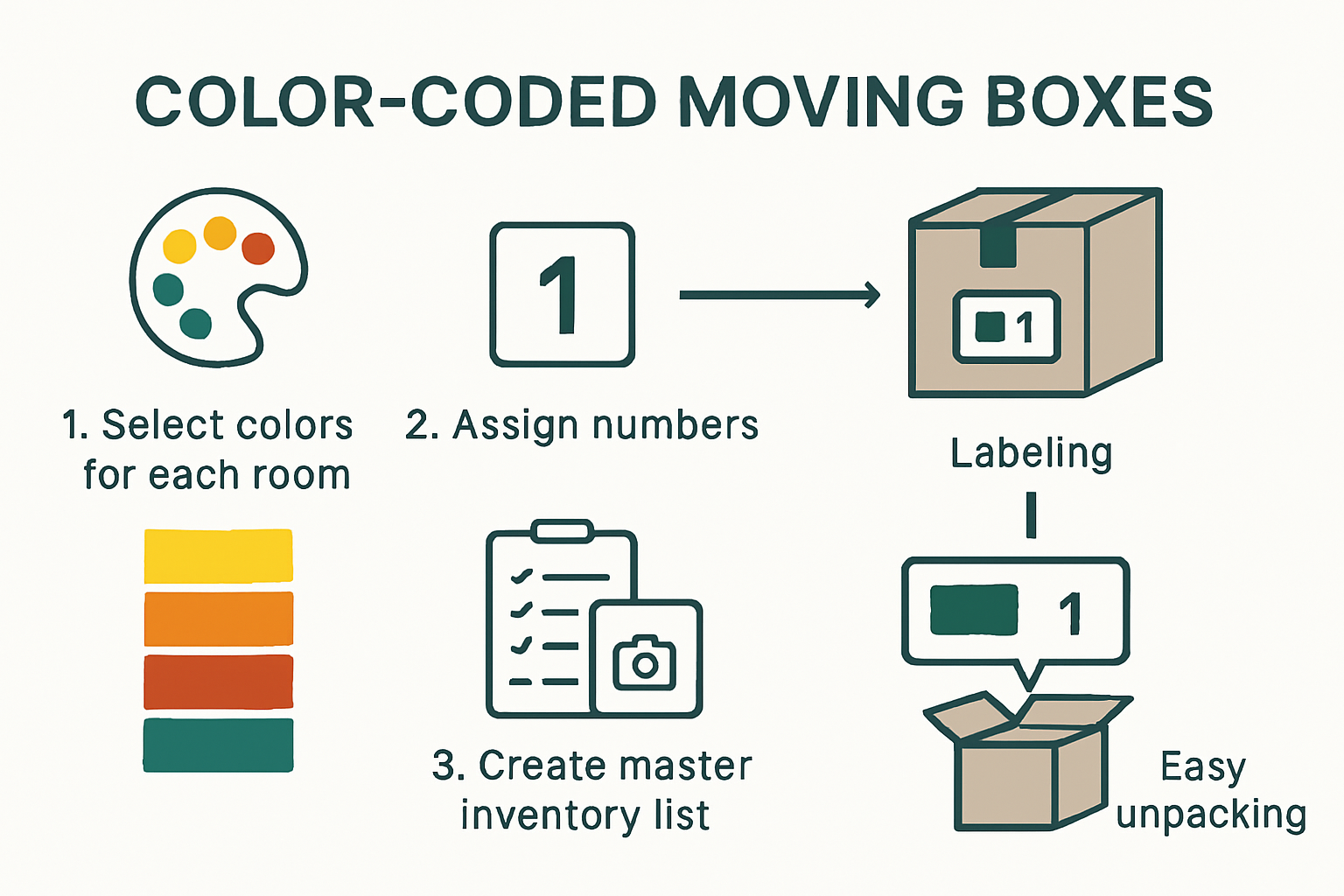
North Bay Movers recommends a comprehensive color-coding strategy that assigns specific colors to different rooms or item categories. This visual method allows movers and family members to quickly identify box destinations without reading every label. For instance, blue could represent kitchen items, green for bedroom belongings, and yellow for living room essentials.
To execute this system effectively, purchase colored dot stickers or use colored markers consistently. Create a master key that documents which color corresponds to each room or category. This approach not only speeds up the moving process but also reduces the likelihood of boxes being misplaced or delivered to the wrong location.
Advanced Numbering Techniques
Georgetown Moving and Storage suggests implementing a detailed numbering system that goes beyond simple sequential counting. Assign each room a specific number and create a corresponding inventory list. For example, all kitchen boxes might start with “1” (1-1, 1-2, 1-3), bedroom boxes with “2” (2-1, 2-2, 2-3), and so on.
This numbering method provides multiple benefits:
Quick Identification: Instantly know which room a box belongs to
Inventory Tracking: Easily verify if all boxes have arrived
Unpacking Organization: Streamline the unpacking process by prioritizing box groups
Creating a Comprehensive Tracking System
Mod24 recommends combining color coding with a detailed numbering system for maximum efficiency. Create a digital spreadsheet that maps out your color and number system, including:
Room assignment
Color code
Box number
Brief contents description
Special handling instructions
Take a photograph of each box before sealing it, and link these images to your digital inventory. This extra step provides a visual backup and helps track your belongings throughout the moving process.
Professional movers emphasize that a well-planned color and numbering system is more than an organizational tool – it’s a stress-reduction strategy. By investing time in creating a clear, consistent tracking method, you transform moving from a potentially chaotic experience into a smooth, manageable process. Learn more about smart moving strategies to make your next move as seamless as possible.
Smart Tips for Special Situations and Items
Moving isn’t always straightforward, especially when dealing with unique, fragile, or sensitive items that require special attention. Understanding how to label and handle these special situations can mean the difference between a successful move and potential disaster.
Handling Fragile and High-Value Items
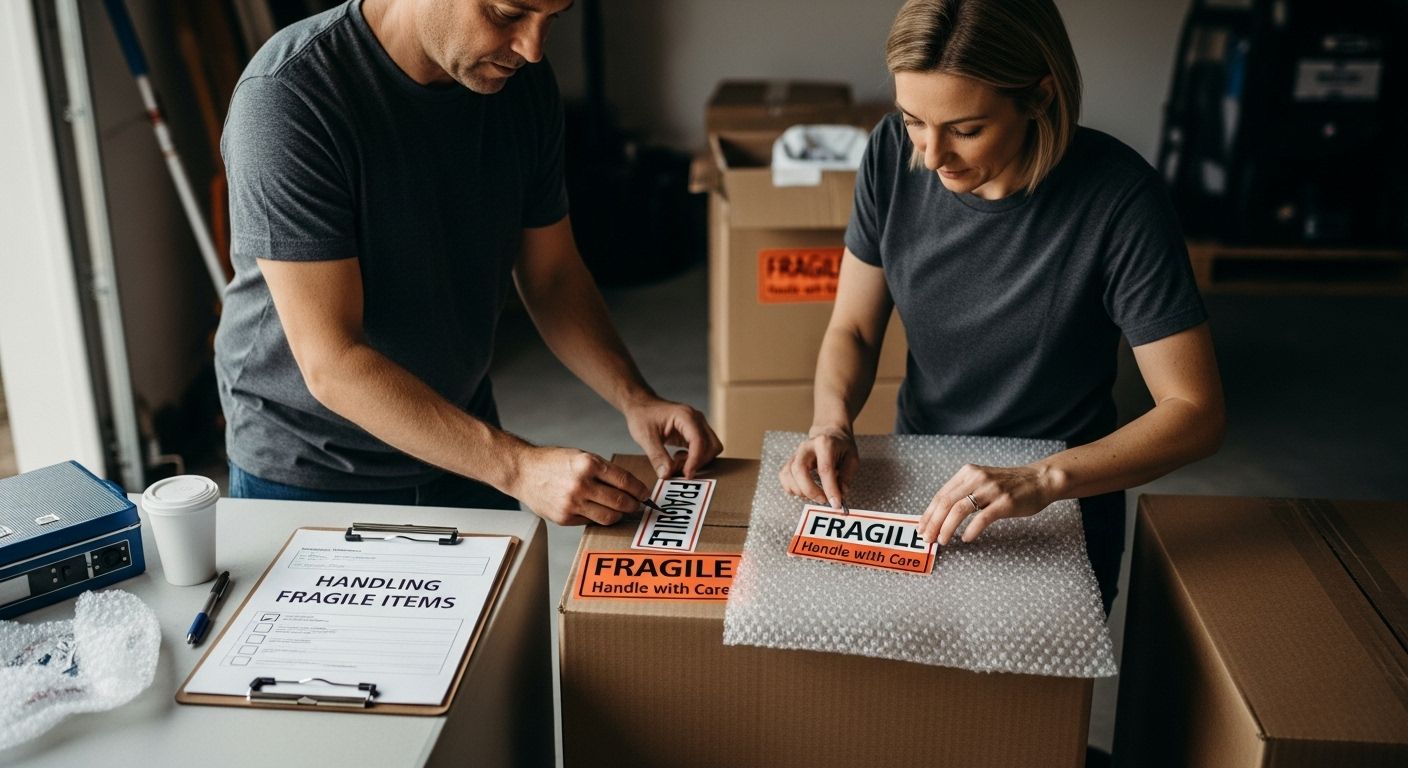
Ron’s Trucking emphasizes the importance of labeling boxes on multiple sides to ensure visibility when items are stacked. For fragile and high-value items, go beyond standard labeling. Use bright red “FRAGILE” stickers, write handling instructions in bold letters, and consider creating a separate inventory list for these critical possessions.
Special considerations for delicate items include:
Artwork: Label with “FRAGILE – HANDLE WITH CARE” and “THIS SIDE UP”
Electronics: Mark boxes with “SENSITIVE ELECTRONICS” and “KEEP DRY”
Antiques: Use multiple “FRAGILE” stickers and detailed handling instructions
Create a separate tracking system for these items, potentially keeping them with you during the move rather than entrusting them to movers.
Digital Tracking for Complex Moves
Lifestyle Moving recommends leveraging digital tools to complement physical labeling. Modern moving strategies incorporate technology to provide an extra layer of organization and security. Consider using:
QR code labels that link to detailed box contents
Moving apps for real-time inventory tracking
Digital spreadsheets with comprehensive item descriptions
Explore our expert guide for managing portable storage to understand how technology can simplify your moving process.
Special Situation Labeling Strategies
Some moves require unique labeling approaches. Military relocations, international moves, or moves involving multiple storage locations demand extra precision. Create a comprehensive labeling system that includes:
Detailed destination information
Temporary storage instructions
Climate control requirements
Special handling notes
Precise box contents
For items requiring climate-controlled storage or special transportation, use waterproof labels with additional protective covers. Include contact information and any special identification numbers that might be necessary for tracking.
Remember that effective labeling for special situations is about communication. Your labels should tell a complete story – where the box came from, where it’s going, what’s inside, and how it should be handled. Take your time, be thorough, and when in doubt, provide more information rather than less. A few extra minutes spent carefully labeling can save hours of stress and potential item replacement during your move.
Frequently Asked Questions
How should I label my moving boxes for easy identification?
To ensure easy identification, label each box on multiple sides with clear, bold text that includes the destination room, a brief description of the contents, and a unique box number. This prevents confusion when boxes are stacked or transported.
What type of labels are best for moving boxes?
Durable, weather-resistant labels are recommended for moving boxes. Waterproof labels with a strong adhesive can withstand moisture and handling, ensuring they remain visible throughout the moving process. Avoid paper labels that can smudge or tear easily.
How can I implement a color-coded system for my moving boxes?
Assign specific colors to different rooms or categories using colored stickers or markers. Create a master key that outlines which color corresponds to each room, allowing for quick identification without needing to read every label.
What should I include on the labels for fragile items?
For fragile items, clearly label boxes with “FRAGILE” stickers on multiple sides. Include specific handling instructions in bold text, such as “THIS SIDE UP” or “HANDLE WITH CARE,” to ensure these boxes are treated appropriately during the move.
Make Your Next Move Effortless With STOMO’s Proven Moving Solutions
You just learned how the right labeling system can protect your belongings and your sanity during a move. But even with all the best tips on labeling moving boxes for stress-free organization, the process can still be overwhelming—especially when you are worrying about weather-resistant supplies, careful handling, and finding reliable storage or moving help.
Simplify your move by partnering with a local expert who knows how to keep things safe, clear, and organized. STOMO Mobile Storage and MOVEMO Moving Service delivers flexible, weather-resistant portable containers right to your home or business. Our flat-rate, personalized moving services provide peace of mind for every South Carolina resident. From self-packing options to full concierge moving, we handle every detail—including securing and transporting your well-labeled boxes to their destination with care.
About The Author