

When you need storage units Charleston has plenty of options. Traditional storage facilities are everywhere across West Ashley, North Charleston, Mount Pleasant, and James Island. These places have been around for years, and they work well for a lot of people.
But something’s changing in how Charleston residents handle storage. More people are choosing portable storage containers instead of traditional facilities. The reason is pretty simple – portable storage solves the biggest headache of traditional storage, which is all that driving and loading.
What Traditional Storage Actually Involves
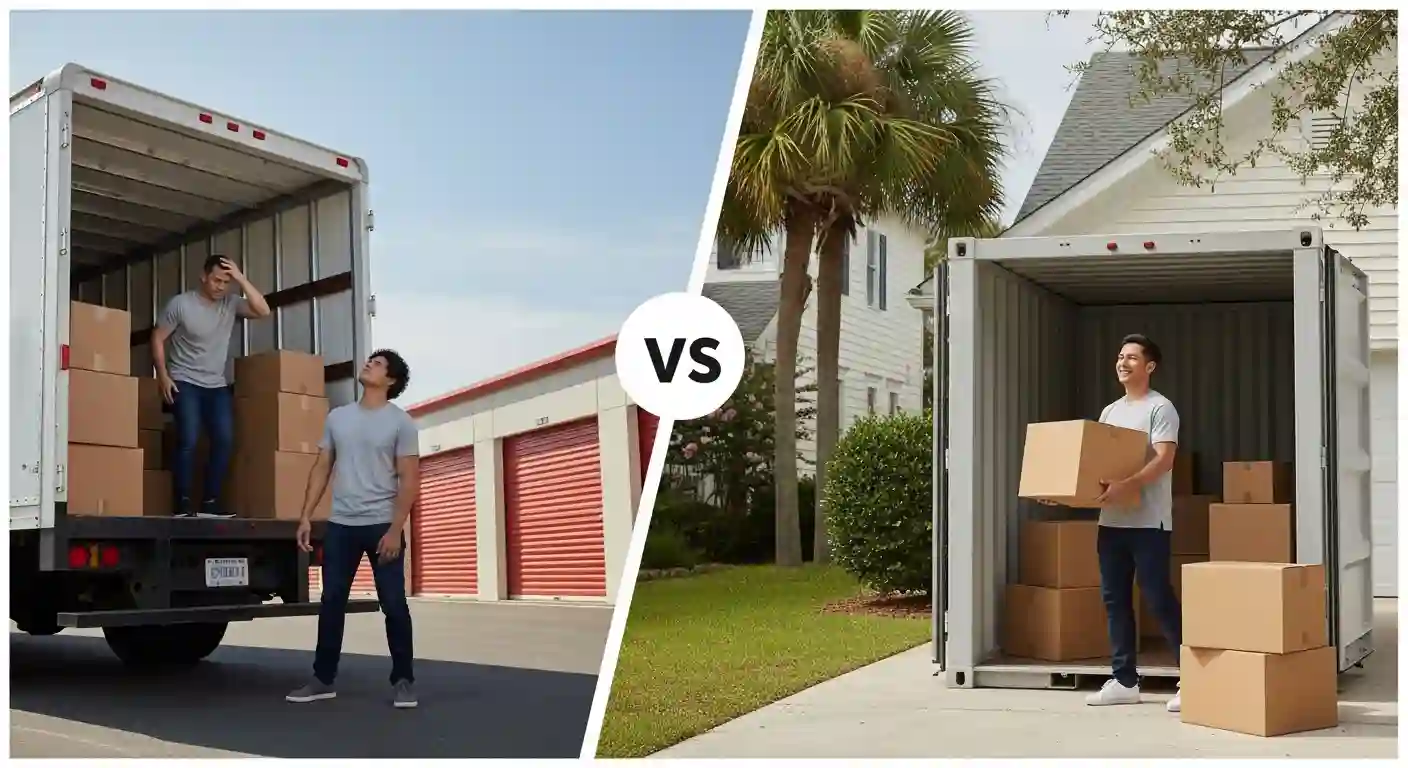
Here’s what happens with traditional storage. You pick a facility, sign up for a unit, and then you need to get your stuff there. That means renting a moving truck for about seventy-five to one-fifty dollars, plus gas money. You load everything at your house, drive across Charleston to the storage place, unload it all into your unit, then return the truck.
The real problem shows up later. Every time you need something from storage, you’re driving back to the facility. And when you’re done with storage completely, you rent another truck and do everything in reverse. That’s four separate loading sessions for one storage period – loading the first truck, unloading into storage, loading the second truck, and final unloading.
Most people don’t think about these hidden costs when they see that monthly rate. A ten-by-ten unit might cost one hundred twenty dollars per month, but your first month actually costs three to four hundred when you include truck rentals and gas. Even the following months add up if you’re visiting your storage regularly.
How Portable Storage Works
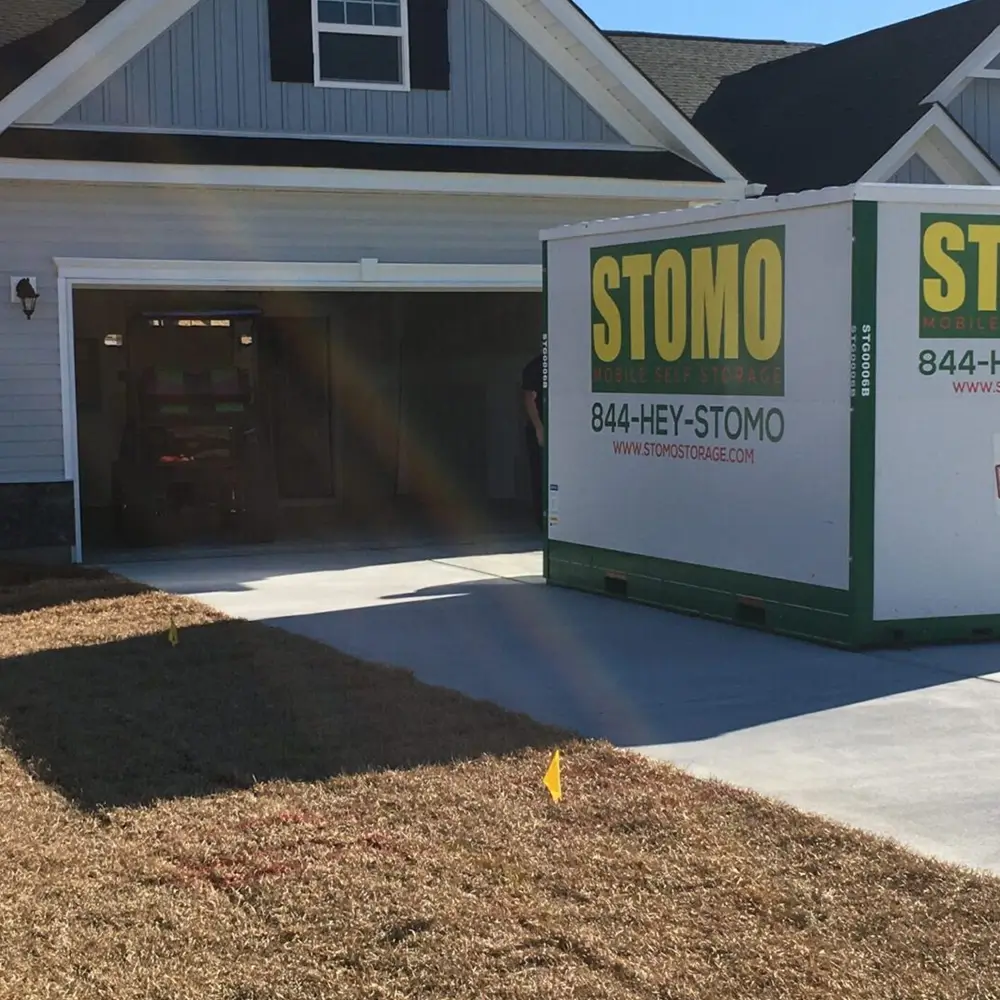
Portable storage companies like STOMO Mobile Storage and MOVEMO Moving bring a steel container to your house and leave it in your driveway. You pack it whenever you want – tonight, tomorrow, next weekend, whatever works for your schedule. There’s no rental truck ticking away by the hour. The container sits at ground level, so you’re not climbing into truck beds or dealing with ramps.
When you’re finished packing, the company picks up the container. They either store it at their warehouse or deliver it straight to your new address. You load your stuff once and unload it once. That’s the whole process. The containers come in two sizes. A twelve-footer holds about as much as a small storage unit, good for a one-bedroom apartment. A sixteen-footer matches a medium storage unit and fits a two-bedroom place. They’re weatherproof and lock securely. Many Charleston companies also offer climate controlled warehouse storage if you’re worried about humidity damaging your belongings.
The Real Cost Difference
Portable storage typically costs two hundred to two-fifty for the first month, including delivery and pickup. After that, you pay one-fifty to two hundred per month. Traditional storage runs one hundred to one-thirty monthly, but remember you’re paying for trucks separately.
For short-term storage of three to six months, the total costs end up pretty similar. You might even save money with a portable when you factor in all those truck rentals and gas. For longer storage beyond a year, traditional facilities become cheaper because those monthly rates add up over time. The break-even point usually hits around ten to twelve months. Before that, portable storage offers better value when you consider convenience and hidden costs. After that, traditional storage wins on pure economics.
When Portable Storage Makes the Most Sense
Moving Between Homes
This is where portable storage really shines. Charleston’s real estate market often creates timing gaps. Your lease ends May thirty-first, but your new house closes June twentieth. With portable storage, you load the container at your old place, they store it during the gap, then deliver it to your new address. You’re not loading and unloading multiple times. This works especially well for people moving from apartments to houses or the other way around. It also helps when you’re moving across the country and need temporary storage while you’re in transition.
Home Renovations
Renovating a Charleston home means protecting your furniture and belongings from construction dust and chaos. With traditional storage, every time you need something you’re driving across town. With a portable container in your driveway, you walk outside and grab what you need.
Contractors like this setup too. They’re not waiting for you to drive somewhere to get materials or tools. Everything’s accessible right there on the property.
Selling Your House
Real estate agents will tell you that staged homes sell faster in Charleston. But staging means removing a lot of furniture and personal items. Where does it go? A portable container in your backyard lets you declutter for showings while keeping everything nearby. When the house sells, the container goes straight to your new place.
Military Families
Families stationed at Joint Base Charleston deal with frequent moves. PCS orders don’t always line up perfectly with housing availability. Portable storage offers month-to-month flexibility without long contracts. You can store for two months or six months, whatever the situation requires.
When Traditional Storage Works Better
Portable storage isn’t always the answer. Traditional facilities make more sense in several situations. If you’re storing stuff for multiple years, traditional storage is definitely cheaper. The monthly rate difference adds up significantly. A traditional unit at one-ten per month costs thirteen-twenty for a year. Portable at one-eighty monthly runs twenty-one-sixty. Over three years, that’s a couple thousand dollars difference.
If you need to access your storage several times a week, traditional facilities work better. Most offer twenty-four-hour access with a gate code. Portable containers stored at warehouses limit access to business hours, which creates problems if you need evening or weekend visits. Downtown Charleston properties often don’t have space for a container delivery. If you’re in a narrow street with no driveway, there’s nowhere to put a twenty-foot steel box. Traditional storage solves this completely since your stuff lives somewhere else.
Vehicle storage is another area where traditional facilities win. If you need to store a boat, RV, or classic car, you need the specialized spaces that storage facilities provide. Portable containers don’t handle vehicles.
Expert Perspective on the Shift
The move toward portable storage Charleston companies isn’t because traditional storage stopped working. Traditional facilities still provide good value and serve millions of customers well. What changed is that people now have a real alternative for the first time. For decades, storage meant one thing – rent a unit, rent a truck, handle the logistics yourself. That model worked fine when it was the only option. Portable storage emerged specifically to reduce the friction of all that loading and moving during already stressful times.
Moving ranks as one of life’s most stressful events. Home renovations aren’t far behind. Anything that simplifies these transitions has genuine value, even if it costs a bit more. That’s why people choose portable storage for short-term needs even when traditional storage might save fifty bucks. The key is matching your situation to the right solution. Neither option is universally better. Both have clear advantages depending on what you actually need.
Making Your Storage Decision
Think about your timeline first. Storing for a few months during a move or renovation? Portable storage probably makes sense. Storing for years? Traditional facilities offer better long-term value. Consider how often you’ll access your belongings. Need something weekly? Traditional storage with twenty-four-hour access works better. Only accessing once or twice during the entire storage period? Portable is fine.
Look at your property situation. Got a driveway or space for a container? Portable storage becomes much more convenient. Living downtown with no space? Traditional storage is your only real option. Think about what you’re storing. Regular household items and furniture? Either option works. Vehicles or boats? You need a traditional facility with vehicle storage.
The Charleston storage market now offers genuine choices. Understanding what each option actually costs, how they work in practice, and what your specific situation requires helps you pick the solution that saves both money and hassle. Whether you choose traditional storage units Charleston facilities offer or go with portable containers, making an informed decision means less stress during whatever transition you’re facing.
Moving or renovating in Charleston? Check out portable storage Charleston options and get a free quote today.
Frequently Asked Questions
How much does portable storage cost in Charleston?
Portable storage runs two hundred to two-fifty for the first month with delivery and pickup included. Monthly rates after that are one-fifty to two hundred. Traditional storage costs one hundred to one-thirty monthly but requires separate truck rentals each time you move stuff.
Can I keep the container at my house?
Yes, most companies let you keep it on your property as long as needed. Pack at your own pace, then call when you’re ready for pickup or delivery to your new location.
Is climate control available with portable containers?
Many Charleston portable storage companies offer climate controlled warehouse storage. They keep your container in a temperature and humidity controlled building, protecting your stuff from Charleston’s heat and moisture.
How long can I rent a portable container?
Most companies work month-to-month with no long contracts. Rent for one month or twelve months depending on your needs. This flexibility helps when timelines are uncertain.
Do I need climate control in Charleston?
Charleston’s humidity damages wood furniture, electronics, documents, leather, and instruments. Climate control costs fifteen to thirty percent more but prevents expensive damage. It’s especially important for summer storage.
What size container do I need?
A twelve-foot container holds a one-bedroom apartment. A sixteen-foot container fits a two-bedroom place. Most companies help you figure out the right size based on what you’re storing.