
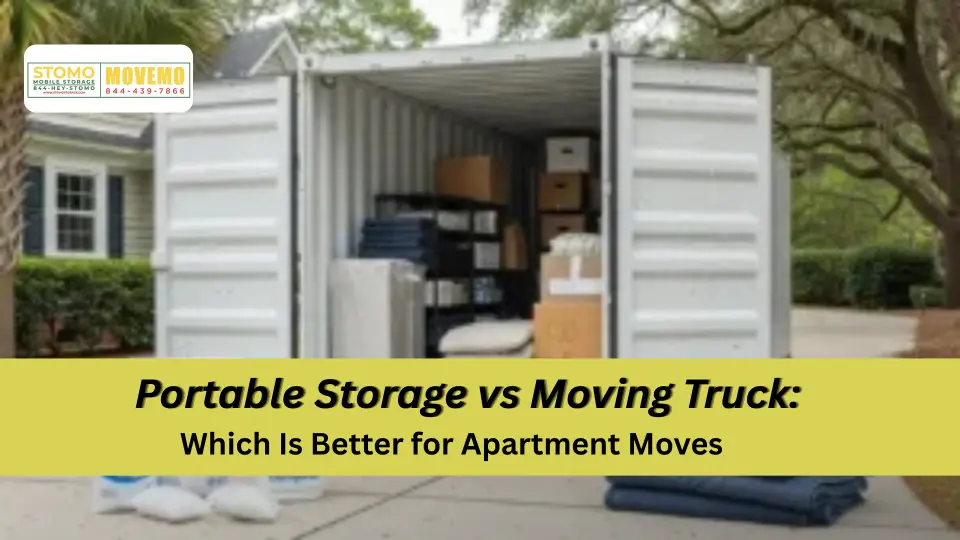
Portable storage is generally the better choice for apartment moves if you need flexibility, extra time to pack, or temporary storage between locations. A moving truck is often the better option if you’re completing your move in a single day, have help available, and want the lowest upfront cost. For apartment residents in Charleston, the best choice depends on your budget, moving timeline, building access, and whether you need short-term storage during your move.
Apartment moves in Charleston often involve tight parking, historic neighborhoods, multi-story buildings, and scheduled move-in windows that can make moving more complicated than expected. This guide compares portable storage containers and moving trucks based on cost, convenience, flexibility, and overall moving experience, so you can confidently choose the option that best fits your move.
Why Apartment Moves Are Different From House Moves
Before comparing your options, it helps to understand what makes apartment moves uniquely challenging. These are not just minor inconveniences, they are real constraints that should drive your decision.
Limited Parking and Loading Access
Most apartment buildings sit on streets with limited or metered parking. There is rarely a dedicated loading zone, and in dense urban areas, finding space for a 26-foot moving truck can be nearly impossible without a permit. Portable storage containers face similar hurdles; they need roughly two parking spaces of clearance and a 15-foot height clearance for delivery. In many cities, you will need to apply for a street parking permit at least a week in advance for either option.
Elevator Reservations and Building Rules
Many mid-rise and high-rise apartment buildings require you to reserve the freight elevator before your move. These reservations are often limited to a few hours per day and must be booked days or weeks in advance. Missing your window means carrying furniture up the stairs or rescheduling entirely. On top of that, some buildings have strict rules about what equipment can be used in common areas, whether dolls are allowed on hardwood floors, and whether large items can be moved through the main lobby. A few buildings outright prohibit portable storage containers from being placed on the property.
Lease Deadlines and Move-In Timing
One of the most stressful scenarios in apartment renting is the gap between leases. Your current lease ends on the 31st, but your new apartment is not available until the 5th. With a moving truck, you have a 24-hour rental window and nowhere to store your belongings in between. With portable storage, your container can go to a secure facility until your new place is ready, no scrambling for a storage unit or sleeping on a friend’s couch surrounded by boxes.
Smaller Spaces and Storage Challenges
Apartment living often means less stuff but it also means tighter layouts, smaller hallways, and limited staging space for packing. You may not have room to pack and stack boxes over several days the way a house mover would. Flexible packing timelines and right-sized containers matter more when you are working with 600 square feet than when you have a three-car garage.
Portable Storage vs Moving Truck: Quick Comparison
| Factor | Portable Storage | Moving Truck |
| Cost (local move) | Higher upfront; often better value with storage | $20–$200/day; add fuel & mileage |
| Packing timeline | Up to 30 days | Typically 24 hours |
| Driving required | No | Yes you drive it |
| Built-in storage | Yes 30 days included | No separate unit needed |
| Loading effort | Ground-level, no ramp needed | Ramp required; carry to/from truck |
| Parking/access | Needs street permit in some cities | Can park most places; needs loading zone |
| Best for | Flexible timelines, lease gaps, long-distance | Same-day local moves on a tight budget |
What Is a Portable Storage Container?
A portable storage container lets you pack at your own pace while the company handles transportation. It’s a flexible alternative to renting a moving truck, especially for apartment moves.
How Portable Storage Works
A portable storage company delivers a weatherproof container directly to your location: your apartment parking lot, the street out front, or a nearby lot if your building does not allow on-site placement. You pack and load it at your own pace, typically over 30 days. When you are ready, the company picks it up and transports it to your new address or holds it at a secure storage facility until you need it. The process is straightforward: schedule a delivery, pack on your timeline, call for pickup. No driving a large vehicle. No returning a rental by a deadline. No scrambling because your elevator reservation runs out before the truck is empty.
Benefits of Portable Storage for Apartment Moves
Flexible moving schedule: You are not locked into a single moving day. Pack over a weekend, a week, or the full 30 days whatever your schedule allows.
No truck driving required: The company handles all transportation. This is a significant advantage for renters who are not comfortable driving a large vehicle through city streets.
Storage and moving in one solution: If your new apartment is not ready, your container can go directly to a secure facility and be delivered when you need it. No separate storage unit rental required.
Ground-level loading: Portable containers load from the ground without a ramp, making it easier to move heavy furniture safely especially relevant when you do not have help.
Less moving-day stress: Because you have already packed and loaded on your own schedule, moving day is just a pickup call, not a full-day operation.
What Is a Moving Truck Rental?
A moving truck rental is designed for completing your move in a single day. It’s often the most affordable option for short local moves if you’re comfortable driving and can stick to a tight schedule.
How Moving Truck Rentals Work
With a moving truck rental, you reserve a vehicle through a company like U-Haul, Penske, or Budget, pick it up at a local branch, load it yourself, drive it to your new address, unload it, and return the vehicle typically within 24 hours for a local move. One-way rentals for long-distance moves usually include several days. You are responsible for driving the truck, managing fuel costs, and returning it on time. Many rental companies also charge per-mile fees on top of the base daily rate, which can add up quickly even on a short local move.
Benefits of Moving Trucks for Apartment Moves
Potentially lower upfront cost: For a local same-day move, a truck rental can be the cheapest option available particularly if you are moving to a studio or small one-bedroom apartment.
Faster for same-day moves: If you are already packed and just need to get your belongings from one address to another in a single trip, a truck is the most direct route.
Complete control over transportation: You choose when to pick up, when to drive, and when to return. There are no scheduling windows to coordinate with a container company.
Ideal for short local moves: For a move within the same neighborhood or a short drive across town, a truck rental is often the simplest and most cost-effective solution.
Key Factors to Compare for Apartment Moves
The best option for your apartment move depends on more than just price. Comparing convenience, packing time, storage, transportation, and labor requirements will help you choose the solution that fits your timeline and moving needs.
Convenience and Flexibility
Portable storage wins on both counts for most apartment movers. The container comes to you, the timeline is generous, and you do not need to coordinate a one-day blitz of packing, loading, driving, and unloading. Moving trucks require significantly more coordination. You have to be ready to go the moment you pick up the vehicle. That said, if your move is simple and you are already packed, a truck is faster and requires fewer scheduling steps. Convenience depends on which side of the equation you are on.
Packing Timeline
This is one of the most underrated factors in an apartment move. With a moving truck, you need to load everything on the day of the rental or pay for an additional day. With portable storage, you have up to 30 days to load the container at your own pace. For renters juggling work schedules, shared apartments, or complex packing situations, that buffer is significant.
Storage Needs
If your new apartment is not ready when your current lease ends, portable storage solves the problem cleanly. Your container is transported to a secure facility and held until your move-in date. With a moving truck, you have to find a separate storage unit, rent it, load your things into it, and then rent another truck when you are ready to move in. That is two moves, not one.
Driving and Transportation
Driving a 16- to 26-foot truck through city streets, tight apartment parking lots, and narrow residential roads is not a skill most renters have. Even short-distance moves involve navigating low-clearance garages, metered streets, and parallel parking scenarios that range from inconvenient to genuinely dangerous for an inexperienced driver. Portable storage eliminates this entirely.
Labor Requirements
Both options require physical loading and unloading unless you hire help. One practical advantage of portable storage is that you can hire movers to load the container during the week, at a time that works for everyone, rather than needing a full crew available on a specific Saturday. Moving trucks often require all hands on deck on a single day, which is harder to coordinate.
Apartment Parking and Access Challenges
Parking and building access can significantly affect how smoothly your apartment move goes. Before choosing between portable storage and a moving truck, make sure you understand your property’s parking rules, space limitations, and permit requirements.
Portable Storage Considerations
Portable containers need a level surface with clearance equivalent to about two parking spaces and 15 feet of overhead space. In many cities and apartment complexes, this requires a street permit, which must be applied for in advance, sometimes a week or more ahead of your move date. Some apartment communities do not allow containers on the property at all, which means you will need a nearby lot or to coordinate with the company for alternative placement. The good news: several portable storage companies offer street-legal trailer options with their own loading ramps, designed specifically for moves where driveway or lot access is not available. Ask about this option when you get a quote.
Moving Truck Considerations
Moving trucks are more flexible in terms of where they can physically go, but apartment parking creates real headaches. You may need to reserve a loading zone with the city, block off metered spots, or work around building rules about truck idling times. In dense urban areas, some buildings require that trucks use a specific entrance or operate only during designated hours. Moving trucks can also park farther away from the building entrance, which means longer carry distances, something that matters a lot when you are hauling furniture up flights of stairs or waiting for an elevator.
Is Portable Storage Cheaper Than a Moving Truck?
A moving truck often has the lower upfront price, but it’s important to compare the total cost of your move. Fuel, mileage, storage, and other expenses can make portable storage the better overall value in many situations.
Understanding the Total Cost
The honest answer is: it depends on the move. Moving truck rentals are cheaper on paper daily rates typically range from $20 to $200 depending on truck size and distance. But that base rate rarely tells the whole story.
- Fuel: You pay for the gas, and large trucks average 6 to 10 miles per gallon.
- Mileage fees: Many rental companies charge per mile on top of the daily rate.
- Insurance and protection plans: Optional but often worth purchasing.
- Storage costs: If you need temporary storage, you pay separately and then move your things twice.
- Labor: If you hire movers for a truck-based move, the cost increases significantly.
When you factor in what portable storage includes transportation, 30 days of storage, and no fuel charges the total cost is often comparable, and sometimes cheaper.
When a Moving Truck May Cost Less
- Same-day local apartment moves where you are already packed and have help
- Short-distance relocations within the same city, especially for small apartments
- Moves where you have no storage gap between leases
When Portable Storage Provides Better Value
- Moves with a timeline gap between leases you avoid paying for a separate storage unit and a second truck rental
- Multi-day moves where you need time to pack and load without rush
- Long-distance apartment moves where gas, mileage, and hotel costs on a truck rental add up quickly
- Moves where reducing stress has real value the flexible timeline often pays for itself
Apartment Moving Scenarios: Which Option Works Best?
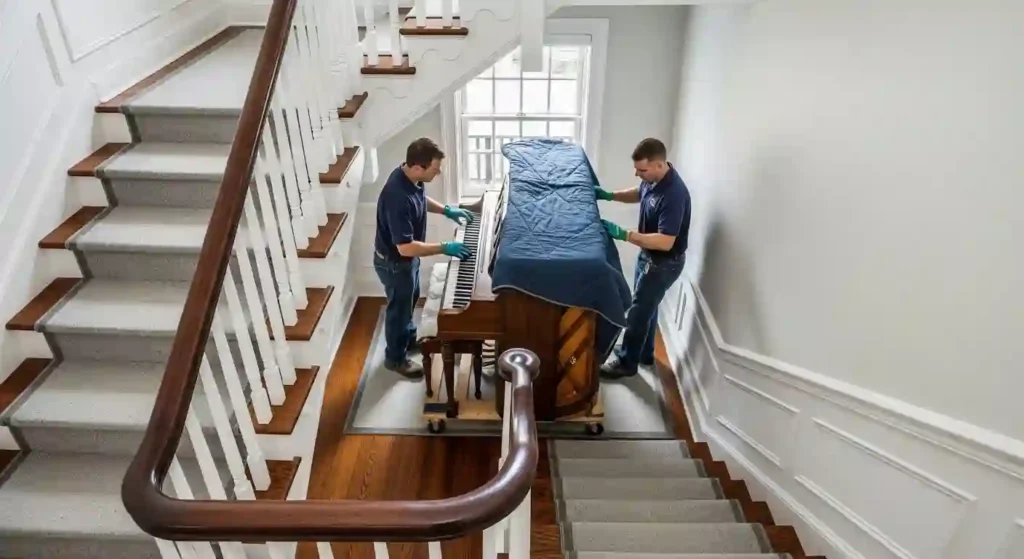
The best moving option depends on your specific situation, not just your budget. Here are common apartment moving scenarios and whether a portable storage container or moving truck is the better fit for each.
Moving Across Town
For a straightforward local move in the same city, short distance, no storage gap a moving truck is a reasonable choice if you are on a tight budget and already have help lined up. The move can be done in a single day. That said, if you are not comfortable driving a large vehicle or do not have a full crew available, portable storage still makes more sense even for short moves.
Moving Between Apartment Leases
This is where portable storage wins decisively. When your old lease ends before your new one begins, a portable container gives you a clean bridge. Load at your own pace, have the container stored, and have it delivered to your new apartment when you are ready. A moving truck cannot solve this problem without an additional storage unit rental.
Moving Into a Smaller Apartment
Downsizing often means deciding what to keep and what to store or sell. Portable storage gives you the time to make those decisions without pressure. You can load what you are keeping, leave the rest for donation or sale, and have the container delivered when you are ready. A truck forces the decision in one day.
Long-Distance Apartment Moves
For cross-country or multi-state moves, portable storage is usually the better option. You avoid driving a large truck across state lines, managing fuel and mileage costs, and arranging overnight stays on the road. The container is picked up and transported while you travel separately.
Moving Without Friends or Family Help
Solo moves are where portable storage really earns its value. Because you can load a container over multiple days, you can pace yourself, hire professional help only for the heaviest items, and avoid the pressure of having to finish everything in a single afternoon. Moving truck rentals become expensive and exhausting when you are the only person doing the work.
Moving During a Busy Leasing Season
Late May through August is peak moving season in most U.S. cities. Truck rentals run short, prices spike, and scheduling becomes competitive. If you are moving during peak season, booking a portable storage container early gives you more security. Your container is reserved and your timeline is flexible, even if your moving date shifts slightly.
Pros and Cons of Portable Storage
Portable storage offers plenty of benefits, but it’s important to consider its limitations before making a decision.
Advantages
- Flexible packing timeline up to 30 days to load
- No truck driving required
- Built-in storage bridge lease gaps without a separate unit
- Ground-level loading reduces injury risk
- Ideal for long-distance moves
- Scalable rent multiple containers if needed
- Less moving-day pressure
Potential Drawbacks
- Higher upfront cost compared to a basic truck rental
- Container placement may require a street permit
- Some apartment complexes do not allow on-site container placement
- Availability may be limited in smaller markets
- You still need to do the loading and unloading yourself unless you hire help
Pros and Cons of Moving Trucks
Like portable storage, moving trucks have both advantages and potential drawbacks. Understanding these trade-offs can help you decide if a moving truck is the right choice for your apartment move.
Advantages
- Lower base cost for local same-day moves
- Wide availability rental locations in most cities
- You control the schedule and timing of the drive
- Good for short-distance moves with help available
- More size options, from cargo vans to 26-foot trucks
Potential Drawbacks
- Requires driving a large vehicle stressful for many renters
- Tight 24-hour window for local rentals creates pressure
- No storage option you need a separate unit if there is a lease gap
- Fuel, mileage, and hidden fees add up quickly
- Harder to coordinate in dense urban apartment settings
- Requires all help to be available on the same day
The Verdict: Which Option Is Better for Apartment Moves?
There isn’t a one-size-fits-all answer, but for most apartment moves, portable storage offers the greatest convenience and flexibility. If you’re moving locally, already packed, have friends or family to help, and can complete everything in a single day, a moving truck is usually the more budget-friendly choice. However, if you need extra time to pack, have a gap between lease dates, or want to avoid driving a large truck, portable storage is often the better investment.
Portable storage is especially well-suited for apartment-to-apartment moves because it simplifies many common challenges, including limited parking, elevator schedules, and temporary storage needs. Instead of rushing to meet a truck rental deadline or moving your belongings twice, you can pack at your own pace and have the container delivered when you’re ready. While both options have their advantages, portable storage is the better overall solution for renters who value flexibility, convenience, and a less stressful moving experience.
Common Apartment Moving Mistakes to Avoid
Even the best moving plan can be disrupted by avoidable mistakes. Planning ahead and paying attention to apartment-specific requirements can save you time, money, and unnecessary stress on moving day.
Waiting Too Long to Reserve Equipment
Both moving truck rentals and portable storage containers book up quickly especially during peak moving season from May through August. Reserve your equipment at least three to four weeks in advance. In major cities, waiting even two weeks can leave you without availability on your desired date.
Underestimating Storage Needs
It is easy to underestimate how much space your belongings actually take up. An 8-foot portable container works for a studio. A one-bedroom apartment typically needs a 12-foot container. A two-bedroom usually requires 16 feet. For a moving truck, a 10- to 16-foot truck covers most one- and two-bedroom apartments. When in doubt, size up the cost difference is usually small, and you will not regret having extra space.
Ignoring Parking Restrictions
Failing to check parking rules before your move is one of the most common and costly mistakes apartment movers make. Some cities require permits for both large trucks and portable containers parked on public streets. Apply at least a week in advance. Check with your building management about designated loading zones or any restrictions on when large vehicles are allowed at the property.
Forgetting Building Rules and Elevator Reservations
Reserve the freight elevator before you book your moving truck or container delivery. Freight elevator slots fill up fast in large buildings, and trying to carry a sofa down six flights of stairs because you missed your window is exactly the kind of moving day disaster that could have been prevented. Also confirm your building’s rules about container placement, truck access hours, and whether movers are allowed to use the main lobby.
Looking for a Better Way to Move?
If you’ve decided that portable storage is the right fit for your apartment move, STOMO Storage makes the process easy. We deliver a secure, weather-resistant portable storage container directly to your location, giving you the flexibility to pack on your schedule. Whether you’re moving across Charleston, dealing with a lease gap, or need temporary storage, our team is here to help make your move less stressful. You can Get a Free Estimate for portable storage.
Conclusion
Both portable storage containers and moving trucks are viable options for apartment moves but they serve different types of movers in different situations. Moving trucks work well when the move is local, simple, and can be completed in a single day. They are the cheaper upfront choice and give you direct control over when and how your belongings are transported.
Portable storage works better for the majority of apartment movers, particularly those dealing with lease gaps, complicated schedules, long-distance moves, or moves without reliable help. The flexible packing timeline, built-in storage, and elimination of truck driving address the specific challenges that make apartment moves uniquely stressful. Before you decide, evaluate your timeline honestly, check your building’s rules, confirm parking requirements, and calculate the real total cost of both options including fuel, mileage, storage, and labor. The right choice is the one that fits your move, not just your budget line.
Frequently Asked Questions
Is portable storage better than a moving truck for apartment moves?
For most apartment moves, yes. Portable storage handles the most common apartment moving challenges, lease timing gaps, no driveway, tight schedules, and the stress of driving a large truck in a city better than a rental truck. The exception is a simple local move where you are already packed, have help available, and your new apartment is ready on the same day your old lease ends.
Is portable storage cheaper than renting a moving truck?
Not always upfront, but often when you calculate the total cost. Moving truck rentals appear cheaper at first glance, but fuel, mileage fees, and any required storage unit rental can make the final cost comparable to or higher than a portable storage container. If you have a lease gap and need temporary storage, portable storage is almost always the more cost-effective option overall.
Can portable storage containers be delivered to apartment complexes?
Yes, in most cases but you should confirm with both your apartment management and the storage company before booking. Some apartment communities require containers to be placed on the street rather than on private property, which may require a street parking permit from the city. A few buildings prohibit containers entirely. Ask about street-legal trailer options from your container company if on-site placement is not available.
What size portable storage container do I need for a one-bedroom apartment?
A 12-foot container is typically the right size for a one-bedroom apartment. An 8-foot container works for a studio or a very lightly furnished one-bedroom. If you have a larger one-bedroom with accumulated furniture and full closets, consider sizing up to a 16-foot container. When in doubt, ask the company for a visual inventory estimate before committing to a size.
What if my new apartment is not ready on moving day?
This is one of the strongest arguments for portable storage. If your new apartment is not ready when your old lease ends, a portable container can be transported to a secure storage facility and held until your move-in date. You avoid paying for a separate storage unit and you avoid having to move your belongings twice. With a moving truck, you would need to find a storage unit, unload everything into it, and then rent a second truck when you are ready.
Do I need movers if I use a portable storage container?
No many renters load their own containers without professional help. However, hiring movers for the loading portion can be a smart investment, especially for heavy furniture or upper-floor apartments. Because portable storage gives you a flexible loading timeline, you can book a crew for a specific day during the week rather than scrambling for weekend availability. The container itself will be transported by the company.
How far in advance should I reserve portable storage or a moving truck?
Reserve at least three to four weeks in advance for moves during peak season (May through August). Outside of peak season, two weeks is generally sufficient for most markets. In major cities or during particularly busy periods, earlier is always better. For portable storage, also account for any permit application time required by your city for street placement some cities require a week or more.
About The Author