Moving or need extra storage space in Charleston? You’ve got two main options: portable storage units or traditional self storage. Both work, but they work differently. One brings storage to your driveway, the other requires you to drive to a facility. Choosing the right one depends on your timeline, budget, and how much hassle you want to deal with. If you’re moving from West Ashley to Mt. Pleasant or just clearing out space during a renovation, understanding the differences can save you time and money.
In this guide, we’ll break down Portable Storage Units Vs Self Storage so you can make the best choice for your Charleston move. We’ll cover costs, convenience, and which option makes sense for different situations.
What Are Portable Storage Units?
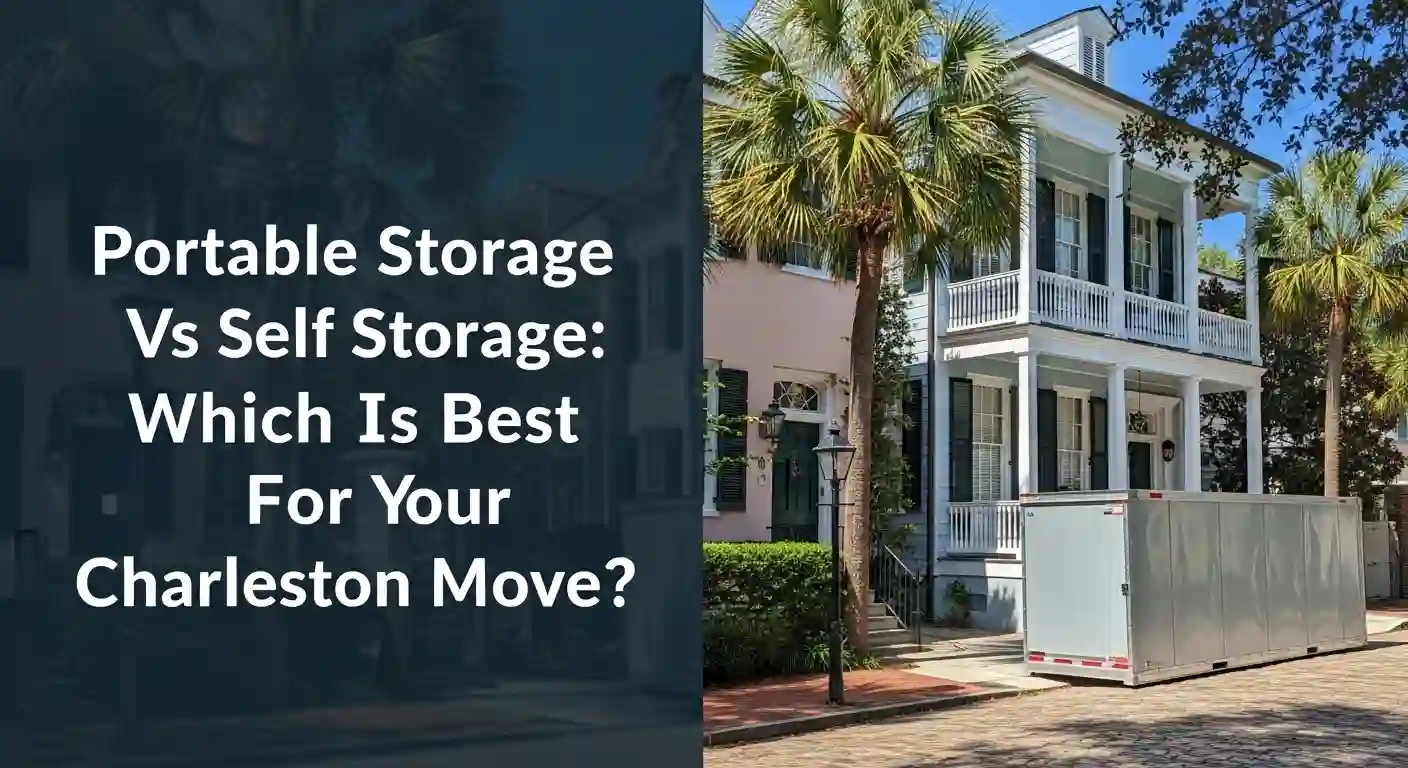
Portable storage units are large metal containers that get delivered right to your home or business. Think of them as storage units on wheels. A company drops one off, you fill it up on your own schedule, and then they pick it up when you’re ready.
How it works:
- Container arrives within a few days and sits in your driveway
- Load your belongings at your own pace, take a weekend or three weeks
- Keep it on-site for easy access or have it stored at a facility
- If moving, they drive it directly to your new Charleston home
Container sizes:
- 8 feet: Studio or 1-bedroom apartment
- 12 feet: 2-bedroom apartment
- 16 feet: 3-bedroom home
- 20 feet: 4-bedroom home or larger
The best part? You only load your stuff once. No renting a U-Haul, no driving back and forth, no unloading and reloading. Everything stays packed until you’re ready to unpack at your destination.
What Is Traditional Self Storage?
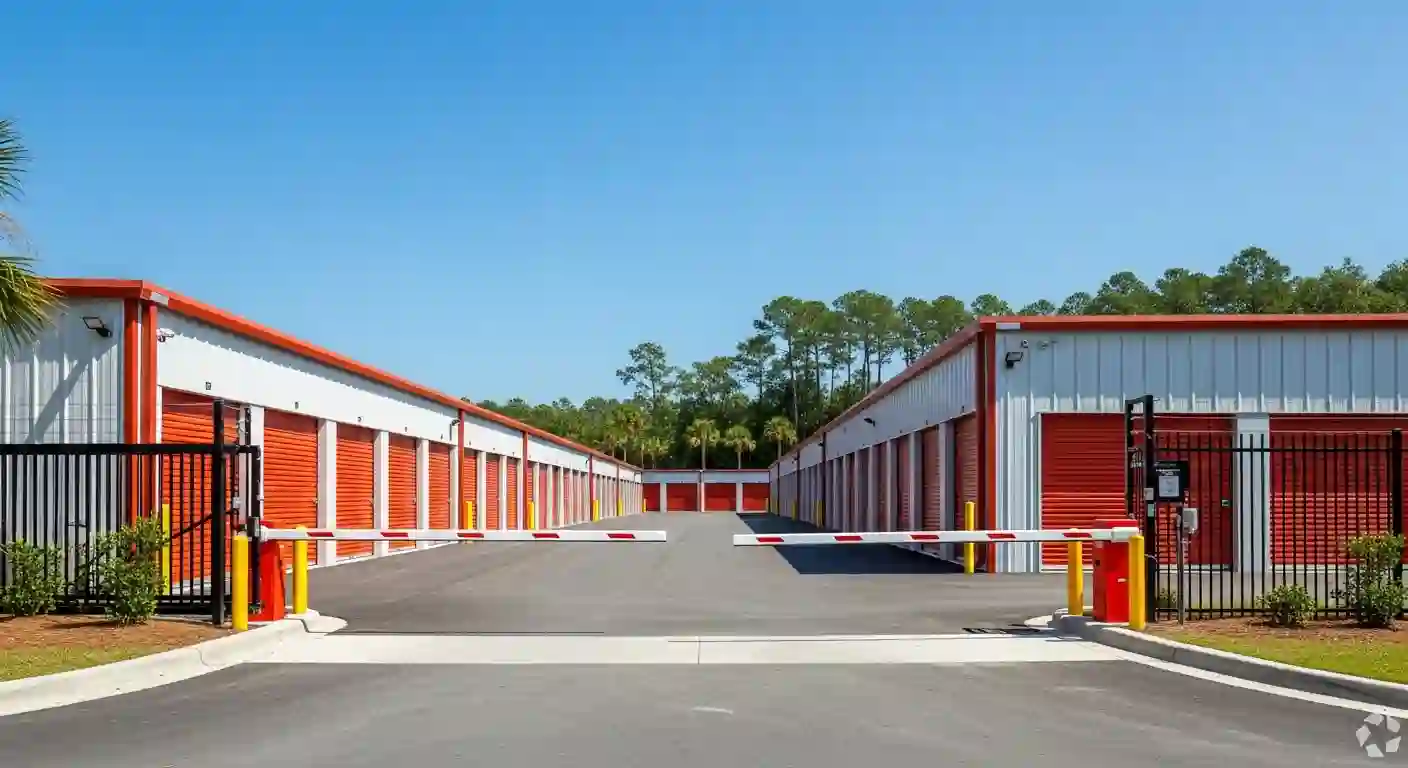
Traditional self storage is what most people picture when they think about storage, a facility with rows of units that have roll-up doors. You rent a space inside a building or in an outdoor area, and you’re responsible for getting your stuff there. These facilities are all over the Charleston area. You’ll find them on Rivers Avenue, Savannah Highway, and near the airport. Units come in many different sizes, from tiny 5×5 closets to huge 20×30 spaces that can fit a whole house worth of furniture.
Most self storage places offer climate control, which is important in Charleston’s humid weather. Climate-controlled units keep the temperature steady and protect things like furniture, electronics, and documents from moisture damage. You get a key or access code to your unit. Some facilities let you visit 24/7, while others have office hours like 6am to 9pm. Security usually includes gates, cameras, and sometimes on-site staff.
The downside? You have to do all the transportation yourself. That means renting a truck, loading everything, driving to the facility (maybe dealing with 526 traffic), unloading into your unit, and returning the truck. Then you’ll do it all over again when you want your stuff back.
Portable Storage Units Vs Self Storage: Key Differences
The main difference between Portable Storage Units Vs Self Storage comes down to convenience versus cost. Let’s look at how they stack up:
| Feature | Portable Storage | Self Storage |
| Where It Goes | Delivered to your home | You drive to facility |
| How You Load | Once, at your location | Twice (truck, then unit) |
| Average Cost | $150-250/month + delivery fees | $80-200/month |
| Access | 24/7 if at your house | Facility hours (varies) |
| Truck Rental Needed | No | Yes ($50-150/day) |
| Climate Control | Usually not available | Common option |
| Best For | Short moves (1-6 months) | Long-term (6+ months) |
Convenience
Portable storage wins here. The container comes to you. You pack on your schedule without rushing to finish in one day. Self storage means renting a truck, loading it, driving to the facility, and unloading. Then you repeat everything when you need your stuff back.
Cost
Self storage costs less per month ($80-200), but add truck rental ($50-150), gas ($30-60), and maybe movers ($100-300). Portable storage runs $150-250 monthly plus delivery ($75-150) and pickup fees ($75-150). It’s more upfront but you avoid truck hassles.
Climate Control & Access
Climate Control: Charleston’s humidity can damage furniture and electronics. Most self storage facilities offer climate control. Portable containers usually don’t, though some companies store your container in a climate-controlled warehouse.
Access: Keep a portable container at your house and access it 24/7. If stored at a facility, you’ll need to schedule delivery. Self storage gives you access during facility hours, many offer 24/7 access.
Which Option Is Best for Your Charleston Move?
The right choice depends on your specific situation. Here’s when each option makes the most sense:
Choose Portable Storage Units If:
You’re moving locally in the Charleston area. Say you’re going from James Island to Summerville or downtown to Daniel Island. A portable container sits in your driveway for two weeks while you pack. When you’re ready, it goes straight to your new place. You’re renovating your Charleston home. Contractors need space to work, and you need somewhere safe for your furniture. A container in your driveway gives you easy access if you need anything while keeping stuff out of the way.
You need flexible packing time. Maybe you work long hours at MUSC or the Navy base. With portable storage, you can pack a little each evening instead of cramming everything into one stressful weekend. You hate the idea of renting a truck. Driving a big moving truck through Charleston traffic, especially over the Ravenel Bridge or on 526, stresses a lot of people out. Portable storage eliminates that completely.
You want to load once and be done. Pack your container carefully, and everything stays exactly where you put it until you unpack.
For example: Moving from a 3-bedroom house in West Ashley to Mt. Pleasant? Get a 16-foot container delivered. Spend two weeks packing at night and on weekends. When you’re done, they drive it to your new house. Total time loading/unloading: once.
Choose Self Storage If:
You need long-term storage. Storing family heirlooms while living in a small apartment? Planning to travel for a year? Self storage makes more sense for 6+ months because the monthly cost adds up less. Climate control is important. Charleston’s humidity averages 70-80%. If you’re storing wood furniture, important documents, or electronics, climate control protects your investment.
You’re storing a small amount. Just need to store boxes from a one-bedroom apartment? A small 5×5 unit costs $40-60 monthly. Portable containers don’t come that small. Your budget is tight. If you can borrow a friend’s truck or already own one, self storage is cheaper month-to-month.
You need frequent access. Keeping business inventory you access weekly? Self storage facilities let you come and go easily. With portable storage at a facility, you’d need to schedule deliveries.Your HOA says no containers. Many Charleston neighborhoods, especially in Mt. Pleasant and Daniel Island don’t allow storage containers in driveways. Self storage is your only option.
For example: Downsizing from a Summerville house to a downtown condo but not ready to sell furniture? Rent a climate-controlled 10×10 unit. Visit when needed to swap out seasonal items or grab something you miss.
Conclusion
Choosing between Portable Storage Units Vs Self Storage depends on your timeline, budget, and how much convenience matters to you. Portable storage costs more but saves time and hassle—perfect for local Charleston moves and renovations. Self storage costs less for long-term needs and offers climate control for Charleston’s humid weather.
Think about your specific situation. Moving from Mt. Pleasant to Summerville next month? Portable storage makes sense. Storing furniture for a year while you figure things out? Self storage is probably smarter.
Ready to make your Charleston move easier? STOMO Storage offers flexible portable storage containers delivered right to your location. Whether you’re moving across town or just need extra space, we make storage simple. Contact us today for a free quote and see how portable storage can help your Charleston move go smoothly.
FAQs About Portable Storage Units Vs Self Storage in Charleston
What’s the main difference between portable storage units and self storage?
Portable storage units are delivered to your home, while self storage requires you to drive to a facility. With portable storage, you load your belongings once at your house. Self storage means loading a truck, driving to the facility, then unloading into your unit—loading twice instead of once.
Is portable storage or self storage cheaper in Charleston?
Self storage typically costs $80-200 monthly but requires truck rental ($50-150/day) and gas ($30-60). Portable storage costs $150-250 monthly plus delivery fees ($75-150) but eliminates truck rental. For short-term needs (1-6 months), costs are similar. For long-term storage (12+ months), self storage is usually cheaper.
Can I keep a portable storage container in my Charleston driveway?
Usually yes, but check with your HOA first. Many Charleston neighborhoods, especially in Mt. Pleasant, Daniel Island, and some Summerville communities, have rules about containers in driveways. You’ll also need enough space—most driveways work, but narrow downtown streets might not.
Are portable storage units climate controlled?
Most portable containers aren’t climate controlled. They’re weatherproof but don’t control temperature or humidity. This is important in Charleston where humidity stays around 70-80% year-round. Some companies offer climate-controlled warehouse storage where they keep your container, but on-site containers aren’t climate controlled.
What size do I need for my Charleston home?
For a 1-2 bedroom apartment, an 8-12 foot container or 10×10 self storage unit works. A 3-bedroom home needs a 16-foot container or 10×15 storage unit. Larger homes (4+ bedrooms) need a 20-foot container or 10×20 storage unit. When in doubt, go one size up.
How long can I rent portable storage or self storage?
Both options work month-to-month in Charleston. Portable storage companies typically rent in 30-day increments. You can keep it as long as needed—weeks, months, or even longer. Self storage also goes month-to-month with no long-term contracts required. Most people use portable storage for 1-6 months and self storage for 6+ months.