
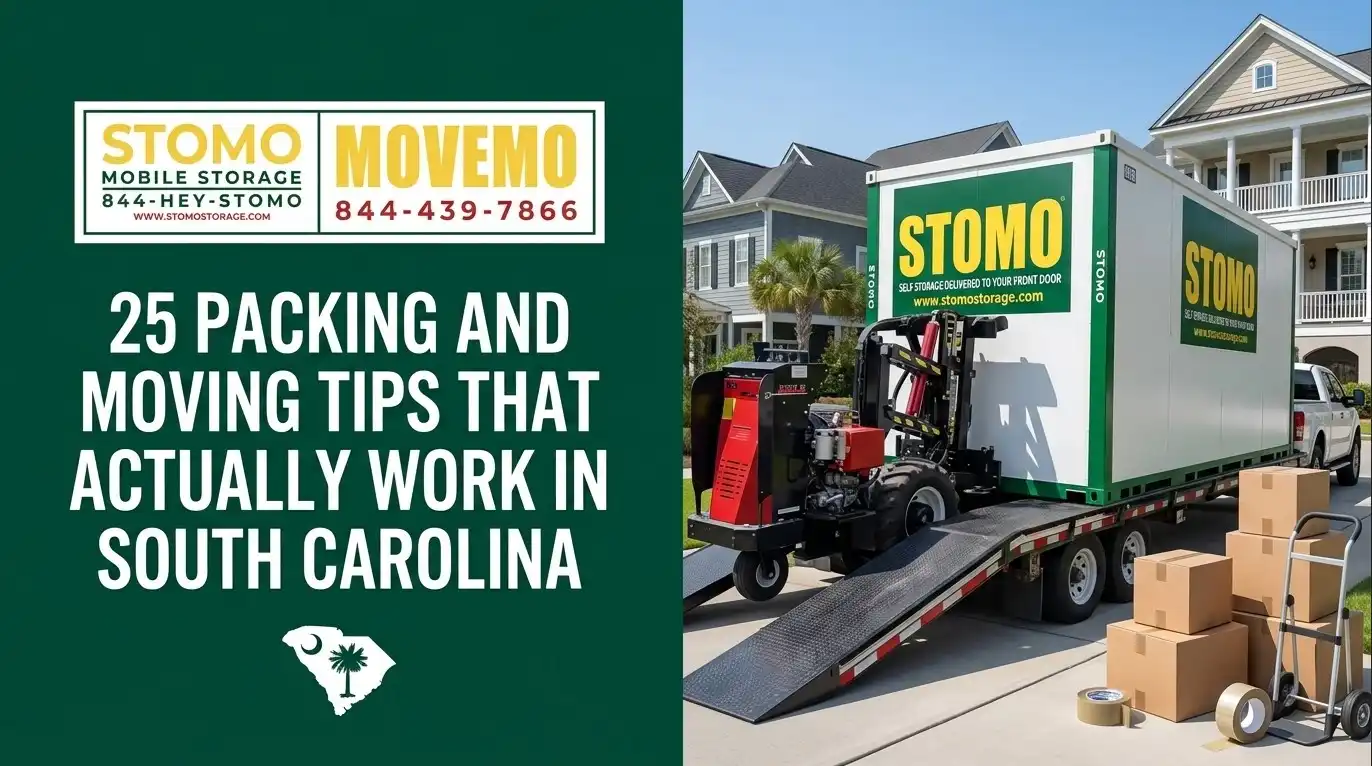
Most packing and moving tips are written for “anywhere.” But if you have ever moved to South Carolina, you already know that advice falls apart fast. What works in a mild, dry climate does not hold up against South Carolina’s heavy humidity, intense summer heat, and unpredictable weather. Moisture can damage furniture, electronics, and boxes quickly, while high temperatures inside storage containers can ruin heat-sensitive items in just a few hours, especially when using a portable storage container Charleston movers rely on during peak summer months.
That is why a standard moving checklist simply does not work here. Moving in South Carolina requires a more careful approach that accounts for local conditions like humidity, heat, and even coastal salt air. This guide is built specifically for people moving in South Carolina, whether you are relocating in Charleston, Columbia, or Myrtle Beach, so you can pack smarter, move faster, and protect your belongings every step of the way.
South Carolina Moving Quick Checklist
Before you dive into the full guide, here is a quick checklist to keep your move on track:
- Start packing 4 to 6 weeks early
- Use moisture protection for sensitive items
- Avoid storing heat-sensitive items in containers
- Label and inventory every box
- Pack a first-night essentials box
Packing and Moving Tips to Do Before You Touch a Single Box
Tip 1: Start 4 to 6 Weeks Before Moving Day
Summer is the busiest moving season in South Carolina, and schedules fill up quickly. Starting four to six weeks early gives you enough time to pack without rushing or making costly mistakes. Break your packing into smaller weekly goals so the workload feels manageable. Leaving one full day open before moving day also gives you time to handle last-minute issues that almost always come up.
Tip 2: Declutter Before You Pack Anything
Decluttering before packing saves time, money, and effort throughout your entire move. Every item you remove is one less thing to wrap, carry, and unpack later. Go room by room and separate items into keep, donate, sell, and trash piles. This process also helps you start fresh in your new home without unnecessary clutter.
Tip 3: Get the Right Packing Supplies First
Having the right supplies from the beginning makes packing faster and safer. You should gather boxes of different sizes, strong tape, markers, packing paper, and bubble wrap. In South Carolina, adding silica gel packets and plastic bins is especially important to protect against humidity. Avoid storing packed boxes in garages because moisture can weaken cardboard in just a few days.
Tip 4: Use the Right Box Size for Every Item
Using the correct box size prevents injuries and protects your belongings. Heavy items like books should always go into small boxes so they are easier to carry. Lighter items like pillows and linens can go into larger boxes without creating too much weight. Keeping boxes under 50 pounds ensures they are safe to lift and stack.
Tip 5: Build a Color-Coded Labeling System
A clear labeling system saves hours of confusion during both moving and unpacking. Assign a color to each room and use matching tape or stickers on every box. Write the room name and a short list of contents on the top and side for easy identification. This system helps movers place boxes correctly and makes unpacking much more organized.
Tip 6: Keep a Digital Inventory of Every Box
Creating a digital inventory gives you full control over your move. Take a quick photo of each box before sealing it and assign a number to it. Store the details in a simple notes app or spreadsheet for easy reference. This step becomes extremely valuable if you need to locate specific items quickly or file an insurance claim.
Room-by-Room Packing Tips for a South Carolina Home
Tip 7: Kitchen Packing Tips
The kitchen is one of the most time-consuming rooms to pack, so planning ahead is important. Drain all appliances completely and secure any loose parts before boxing them. Pack dishes vertically instead of stacking them flat to reduce pressure and prevent breakage. Taking extra care here helps avoid damage to some of your most fragile and valuable household items.
Tip 8: Bedroom Packing Tips
Packing bedrooms can be simple if you use smart shortcuts. Leave clothes on hangers and cover them with bags so they are ready to hang immediately in your new home. Use suitcases to pack heavy items like shoes or books since they are easier to roll than carry. Protect your mattress with a proper cover to prevent exposure to humidity and dust.
Tip 9: Living Room and Fragile Items
Living rooms often contain delicate and valuable items that require extra care. Whenever possible, use original packaging for electronics like TVs and speakers. Add tape across glass surfaces to reduce the risk of shattering during transport. Use breathable materials like moving blankets instead of plastic to avoid trapping moisture on wood surfaces.
Tip 10: Bathroom Packing Tips
Bathrooms should be packed last since you will need them until moving day. Place all liquids inside sealed bags to prevent leaks that can damage other items. Keep daily essentials like toiletries and medications easily accessible. This approach ensures you are comfortable and prepared during the final days of your move.
Tip 11: Garage and Outdoor Items
Garage items often require extra preparation before packing. Drain fuel from equipment and clean all tools and furniture thoroughly. Make sure everything is completely dry before placing it into storage. Moisture trapped inside a container can quickly lead to mold or rust in South Carolina’s climate.
Tip 12: Home Office and Documents
Your home office contains important and often irreplaceable items. Keep documents like passports and contracts with you instead of packing them away. Use plastic containers to protect paperwork from moisture damage. Backing up all digital files before packing electronics adds an extra layer of security.
South Carolina Packing Tips for Heat, Humidity, and Coastal Conditions

Tip 13: Protect Items from Humidity
Humidity is one of the biggest challenges when moving in South Carolina. Items like paper, electronics, and leather can easily be damaged if not protected properly. Use silica gel packets inside boxes to absorb excess moisture. Choosing plastic bins over cardboard for sensitive items adds an extra layer of protection.
Tip 14: Avoid Heat-Sensitive Storage Items
Summer temperatures inside storage containers can become extremely high. Items like candles, cosmetics, electronics, and vinyl records can melt or become damaged in these conditions. It is best to transport these items directly to a climate-controlled environment. Planning ahead helps you avoid costly replacements later.
Tip 15: Coastal Moving Tips
Coastal areas in South Carolina bring additional challenges due to salt in the air. Metal items can rust faster if not protected properly. Wrap these items in cloth to allow airflow and reduce moisture buildup. Using breathable coverings also helps protect wood furniture from long-term damage.
Tip 16: Plan for Hurricane Season
Hurricane season can impact moving plans with very little notice. Preparing for possible delays is essential if you are moving between June and November. Line important boxes with protective materials to guard against water exposure. Staying flexible with your schedule can help you avoid unnecessary stress if conditions change.
How to Pack and Load a Portable Storage Container the Right Way
Tip 17: Balance Weight Properly
Proper weight distribution keeps your belongings safe during transport. Place heavier items at the bottom and toward the back of the container. Stack lighter items on top to avoid crushing fragile belongings. Keeping weight evenly balanced prevents shifting while the container is being moved.
Tip 18: Pack for Accessibility
Packing with accessibility in mind saves time later. Leave a small walkway if you plan to access items during storage. Place frequently needed boxes near the front for easy retrieval. This simple strategy prevents unnecessary unpacking and repacking.
Tip 19: Know What Not to Store
Certain items should never be placed in storage containers. Hazardous materials, food, and living items are not safe to store in enclosed spaces. Heat-sensitive items should also be handled carefully during summer months. Understanding these limits helps you avoid damage and safety risks.
Moving Day Tips and the First-Night Essentials Box
Tip 20: Pack a First-Night Essentials Box
Your first night in a new home can be stressful without proper planning. Pack a box with essentials like clothing, toiletries, and basic kitchen supplies. Include chargers, medications, and important documents so they are always within reach. Having everything ready makes your first night much more comfortable.
Tip 21: Photograph Everything Before Moving
Taking photos before moving provides valuable protection. Capture images of furniture, walls, and electronics to document their condition. Store these files in cloud storage so they are easy to access later. This step is especially useful if you need to file a claim or resolve disputes.
Packing Tips for South Carolina Insurance Packouts and Renovation Moves
Tip 22: Document Damage Before Packing
When dealing with damage, documentation is critical. Take clear photos and videos of all affected areas before moving anything. This information supports your insurance claim and speeds up the process. Always confirm with your adjuster before packing items away.
Tip 23: Use Plastic Bins for Water-Damaged Items
Water-damaged situations require different packing methods. Cardboard boxes can quickly fall apart in wet conditions. Plastic bins provide stronger protection and keep items contained. Labeling each bin clearly also helps track damaged items.
Tip 24: Use On-Site Storage for Convenience
On-site storage makes renovation and recovery projects easier to manage. Keeping your belongings nearby allows quick access when needed. It also reduces the need for multiple moves and handling. This approach saves time and lowers the risk of additional damage.
Tip 25: Keep a Detailed Packout Inventory
A detailed inventory keeps your packout organized and efficient. Record each item along with its condition and estimated value. This information becomes essential for insurance documentation. Staying organized helps avoid confusion and speeds up claims processing.
Common Moving Mistakes in South Carolina
Avoid these common problems when moving in South Carolina:
- Waiting too long to start packing during peak season
- Packing items that are not completely dry
- Storing boxes in humid garages
- Ignoring heat-sensitive belongings
- Overloading boxes beyond safe lifting weight
Simple Moving and Portable Storage Solutions in South Carolina
Planning a move in South Carolina does not have to be stressful when you have the right help. With STOMO Storage, you get reliable moving services and portable storage in Charleston, Myrtle Beach, and Columbia, SC all in one place. Pack at your own pace, store your items safely, and move when you are ready without pressure.
Whether you need extra time, secure storage, or an easier way to handle your move, STOMO Storage makes everything simple and flexible. Get your free quote today and see how our moving and portable storage solutions can save you time, reduce stress, and keep your belongings safe from start to finish.
Frequently Asked Questions
How far in advance should I start packing for a move in South Carolina?
You should start packing at least 4 to 6 weeks before your moving date to stay organized and avoid last-minute stress. Starting early also gives you time to declutter, gather supplies, and handle unexpected delays, especially during peak moving season.
What items should not go into storage containers in South Carolina?
You should avoid storing hazardous materials, perishable food, and anything that can melt or warp in high heat. Items like candles, electronics, and cosmetics are especially vulnerable and should be transported in a climate-controlled environment instead.
How do I protect items from humidity during a move?
Use moisture absorbers like silica gel packets and choose plastic bins instead of cardboard for sensitive belongings. It is also important to ensure everything is completely dry before packing to prevent mold and mildew from developing.
Is portable storage cheaper than hiring movers in South Carolina?
Portable storage can often be more affordable because it reduces labor costs and gives you flexibility with your timeline. However, total cost depends on distance, container size, and how much assistance you need during the move.
What is a packout in South Carolina moving and insurance claims?
A packout is the process of removing, documenting, and storing your belongings during home repairs after damage such as fire or flooding. It helps protect your items while also creating a detailed inventory for insurance claims and restoration work.