
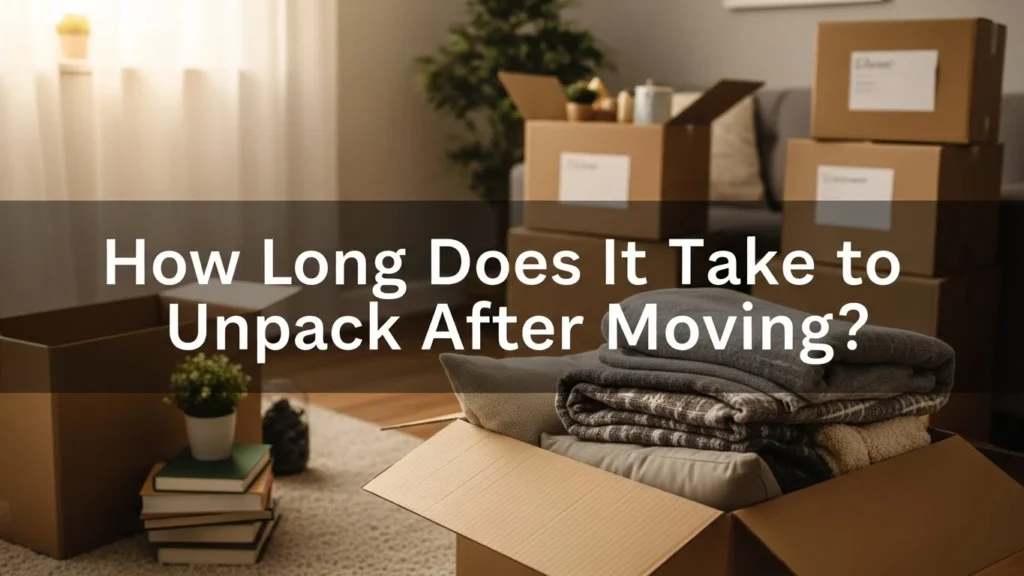
Moving into a new home feels exciting until you see stacks of boxes everywhere. Most people wonder how long this unpacking process will actually take and when their house will finally feel like home.
The answer depends on your home size, how organized you are, and how much help you have. Research shows that Americans take an average of 182 days to unpack their last box after moving. That’s six months of living with boxes in closets and corners. However, with the right approach, most families can fully unpack in just one to three weeks. The difference comes down to having a clear plan and staying focused on one room at a time.
How Long Does It Take to Unpack a House?
Studio or 1-bedroom apartment: 3 to 5 days with steady effort.
2-bedroom home: 5 to 7 days when unpacking consistently.
3-bedroom home: 1 to 2 weeks for complete unpacking.
4-bedroom home or larger: 2 to 4 weeks, especially with garages and storage areas.
These timelines assume you spend a few hours each day unpacking. If you work full-time or have young children, add another week to these estimates.
Why Do Americans Take 6 Months to Unpack?
The 182-day average happens because people lack a clear unpacking plan. Without the pressure of a move-out deadline, boxes sit in corners and closets for months.Many people also try to unpack everything at once and burn out quickly. They abandon the process halfway through and live with partially unpacked boxes indefinitely.
The families who unpack fastest are the ones with a room-by-room strategy. They focus on essentials first and tackle one space at a time until it’s completely done.
What Should You Unpack in the First 48 Hours?
Your first two days should focus on survival essentials only. Don’t try to organize everything perfectly right away.
Day 1 priorities:
- Set up at least one bed with clean sheets
- Unpack bathroom basics (toilet paper, soap, towels)
- Get your coffee maker and a few dishes out
- Find phone chargers and medications
- Set up one lamp in each main room
Day 2 priorities:
- Organize enough kitchen items to cook simple meals
- Unpack clothes you’ll wear this week
- Set up your shower with toiletries
- Arrange basic living room seating
By the end of day two, you should be able to sleep, shower, and eat breakfast comfortably. Everything else can wait until you’re less exhausted.
Which Rooms Should You Unpack First?
The kitchen takes priority because it’s the most time-consuming room and the most essential for daily life. Start with everyday dishes, glasses, and coffee mugs you use for meals. Then unpack your pots, pans, and cooking utensils. Get your coffee maker, toaster, and other daily appliances set up on the counter.
Kitchen unpacking order:
- Everyday dishes and glasses
- Pots, pans, and cooking utensils
- Coffee maker and daily appliances
- Pantry items and spices
- Food storage containers
- Specialty items and small appliances
Bedrooms come next because everyone needs a proper place to sleep and get dressed. Focus on clothes you wear regularly and organize them in closets and dressers. Bathrooms need towels, toiletries, and cleaning supplies stocked. Once these three room types are functional, your home feels livable even with boxes still waiting in other areas.
How Long Does It Take to Unpack a Kitchen?
Most kitchens take 4 to 8 hours to fully unpack and organize. This is the longest room in your home because of the sheer volume of items stored there. Break the kitchen into sections rather than trying to do everything at once. Spend two hours unpacking dishes, then take a break before tackling cookware.
Don’t aim for perfect organization on the first try. Get everything out of boxes and into cabinets, then adjust the layout over the next few weeks as you cook and realize what works better.
What Takes the Longest When Unpacking?
Making decisions about where things should go slows down unpacking more than anything else. When you pull an item from a box and spend five minutes deciding its location, you’re losing valuable time.
Common time-wasters during unpacking:
- Searching through unlabeled boxes for specific items
- Reorganizing the same drawer multiple times
- Stopping to clean or rearrange as you go
- Getting distracted by sentimental items and photos
- Shopping for organizers before seeing what you need
The families who unpack fastest make quick placement decisions. They put items in logical spots and adjust later if needed rather than overthinking every choice.
Should You Unpack Everything in One Weekend?
Trying to unpack your entire home in one weekend leads to exhaustion and poor decisions. You’ll shove items into random spots just to get boxes empty, then spend months reorganizing. Set realistic daily goals instead of marathon unpacking sessions. Two focused hours each day produces better results than eight exhausted hours on Saturday.
Realistic weekly unpacking schedule:
- Week 1: Kitchen, bedrooms, bathrooms
- Week 2: Living room, home office, main closets
- Week 3: Storage areas, garage, final touches
This paced approach prevents burnout and gives you time to thoughtfully organize each space. You’re creating long-term systems, not just emptying boxes.
How Does Portable Storage Speed Up Unpacking?
Traditional moves force you to receive everything at once and find immediate space for all your belongings. Portable storage pods offer a smarter approach that reduces unpacking stress significantly. Keep seasonal items like holiday decorations and winter clothes in the pod until you actually need them. This prevents cluttering your new closets with things you won’t use for months.
Items to keep in storage during unpacking:
- Seasonal decorations and clothing
- Extra furniture you’re not sure about yet
- Sports equipment used only certain times of year
- Sentimental boxes that don’t need immediate attention
- Tools and supplies for future projects
Charleston families report this approach cuts their unpacking stress in half. Your home stays cleaner during the process because you’re only bringing in items you need right away. The storage pod sits in your driveway as long as you need it. There’s no rush to make final decisions about every belonging while you’re still settling into the new space.
What Are the Biggest Unpacking Mistakes?
Jumping between rooms creates chaos everywhere and prevents you from seeing real progress. Finish one room completely before starting another so you have functional spaces as you go. Buying organizational products before unpacking wastes money on items that don’t fit your actual needs. Wait until you see what you have and what storage challenges you face.
Common mistakes that slow unpacking:
- Not labeling boxes by room during the move
- Leaving empty boxes scattered instead of breaking them down
- Trying to achieve perfect organization immediately
- Unpacking decorative items before essentials
- Working when exhausted instead of taking breaks
The most successful unpacking happens when you focus on function first and decoration later. Get your daily routines working smoothly, then add personal touches over the following weeks.
How Can You Unpack Faster Without Help?
Unpacking alone takes longer, but smart strategies make the process manageable. Set a timer for focused 45-minute work sessions with 15-minute breaks to prevent exhaustion. Handle each item only once when you remove it from a box. Put it directly where it belongs rather than creating “decide later” piles that become permanent clutter.
Solo unpacking strategies:
- Start with the smallest room for quick wins
- Play podcasts or music to stay motivated
- Reward yourself after completing each room
- Keep water and snacks nearby to avoid interruptions
- Break down boxes immediately to see progress
Most people unpacking alone take three to four weeks to finish completely. This timeline is perfectly normal and often results in better organization than rushed group efforts.
How Should You Pack to Make Unpacking Easier?
The way you pack determines how quickly you’ll unpack in your new home. Smart packing decisions during your move can cut your unpacking time in half. Label every box with the destination room and a brief list of contents. Use a thick marker and write on multiple sides so you can read labels no matter how boxes are stacked.
Essential packing strategies for easy unpacking:
- Pack one room at a time to keep similar items together
- Use clear plastic bins for items you’ll need immediately
- Create a color-coding system (blue tape for kitchen, red for bedroom)
- Pack an “open first” box with essentials for your first night
- Keep all hardware and screws taped to furniture pieces they belong to
- Take photos of electronics before disconnecting them
Pack heavier items in smaller boxes and lighter items in larger boxes. This makes boxes easier to carry and prevents you from overpacking and creating boxes too heavy to lift safely. Don’t mix items from different rooms in the same box. When you open a kitchen box, everything inside should belong in the kitchen. Mixed boxes force you to walk items to different rooms, wasting time and energy.
Room-specific packing tips:
Kitchen: Wrap dishes individually and pack them standing upright like records. Pack glasses in small boxes with plenty of padding. Label boxes as “kitchen – everyday dishes” or “kitchen – pots and pans” for easy identification.
Bedroom: Pack out-of-season clothes separately from current wardrobe items. Use wardrobe boxes for hanging clothes so they transfer directly to your new closet without folding.
Bathroom: Pack toiletries in sealed plastic bags to prevent leaks. Keep one box of bathroom essentials separate so you can access them immediately on moving day.
Professional movers recommend creating a master inventory list as you pack. Number each box and write what’s inside on a spreadsheet. This helps you locate specific items quickly during unpacking.
Is It Normal to Have Boxes Packed After Months?
Many families have a few boxes that stay packed for months after moving. Holiday decorations, memorabilia, and old paperwork often remain in storage areas indefinitely. After three months in your new home, review any boxes that remain unopened. If you haven’t needed what’s inside during that time, you probably don’t need it at all.
Consider donating these items without even opening the boxes. This saves time and prevents you from talking yourself into keeping things you don’t actually use.
Get Settled at Your Own Pace
Unpacking takes most families one to three weeks when they work consistently. The key is focusing on function over perfection and giving yourself permission to go at a sustainable pace. At STOMO Mobile Storage and MOVEMO Moving Service, we help Charleston families unpack without the pressure. Our portable storage pods let you keep extra belongings accessible while you organize your new home room by room.
We’re a local, family-owned company that understands moving challenges in the Charleston area. Contact us today to learn how flexible storage solutions make settling in easier and less stressful.
Frequently Asked Questions
1. How long does it take the average person to unpack after moving?
The average person takes 1 to 3 weeks to fully unpack after moving, depending on home size. However, research shows Americans take an average of 182 days to unpack their last box. The difference comes down to having a clear room-by-room plan and working consistently each day.
2. What should I unpack first when moving into a new house?
Unpack your bed and bedding first so you have a comfortable place to sleep. Next, set up your bathroom with essentials like toilet paper, soap, and towels. Then unpack basic kitchen items like your coffee maker and a few dishes to prepare simple meals.
3. How long does it take to unpack a 3 bedroom house?
A 3-bedroom house typically takes 1 to 2 weeks to fully unpack when working a few hours daily. The kitchen takes the longest at 4 to 8 hours due to the volume of items. Bedrooms and bathrooms can be functional within the first week.
4. Is it normal to not unpack everything after moving?
Yes, it’s completely normal to have boxes that stay packed for months after moving. Holiday decorations and sentimental items often remain in storage without causing problems. If a box stays unopened for three months, you probably don’t need those items.
5. How can I unpack faster after moving?
Unpack one room completely before starting another to avoid chaos throughout your home. Label boxes clearly during packing and set focused 45-minute work sessions with breaks. Handle each item once by putting it directly where it belongs.
6. Should I hire professionals to help me unpack?
Professional unpacking services can cut your time in half and complete a 3-bedroom home in 1 to 2 days. This works well for busy professionals or families with young children. Portable storage also helps by keeping non-essential items out of the way.