
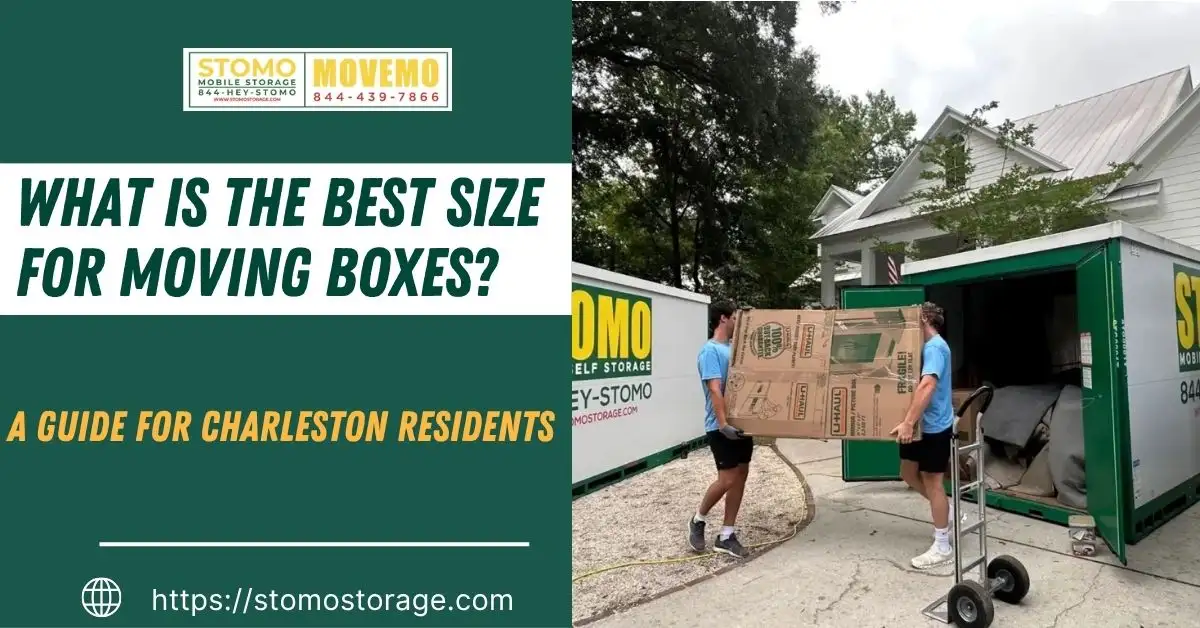
You packed everything into one giant box, taped it shut, and tried to pick it up. Then your back gave out before you reached the door. Sound familiar? Wrong box size is one of the most common and most painful moving mistakes people make.
Here’s the short answer: medium boxes (3 cu. ft.) are the best all-around size for most moves. But you’ll need a mix of sizes to pack safely and protect your things. This guide covers every size, what goes in each one, how many you need, and a smarter way to handle your move altogether.
The 4 Standard Moving Box Sizes
Every moving box you find at a store falls into one of four standard sizes. Each size has a job to do, and using the wrong one causes problems: broken dishes, crushed items, or boxes that fall apart mid-move.
| Size | Dimensions (L × W × H) | Cu. Ft. | Weight Limit | Best For |
| Small | 16″ × 12″ × 12″ | 1.5 | 55 lbs | Books, tools, heavy items |
| Medium | 18″ × 18″ × 16″ | 3.0 | 60 lbs | Almost everything |
| Large | 18″ × 18″ × 24″ | 4.5 | 65 lbs | Pillows, blankets, linens |
| Extra-Large | 22″ × 22″ × 21.5″ | 6.0 | 70 lbs | Big, lightweight items |
The rule is simple: heavy items go in small boxes, light items go in large boxes. Most people flip this around and end up with boxes they can barely lift.
Small Moving Boxes (1.5 cu. ft.)
Small boxes are built for heavy things. Books, canned food, hand tools, small kitchen appliances, vinyl records, and hardware all belong here. A small box full of books weighs around 40–50 lbs manageable. Put those same books in a large box and you’re looking at 80+ lbs, which is both dangerous and hard on the box itself.
Pack items tightly so nothing shifts inside. Fill any gaps with crumpled packing paper. Tape the bottom seam with three strips in an H-pattern one strip down the center and one across each end. This prevents the bottom from giving out when someone picks it up.
Medium Moving Boxes (3 cu. ft.)
This is the box you’ll use most. Order more mediums than any other size. They work for pots and pans, shoes, folded clothes, toys, games, small lamps with shades removed, picture frames, and most everyday household items. The medium box hits a sweet spot. It holds a real amount of stuff, but stays light enough to carry without straining. Every moving professional agrees the medium box is the workhorse of any move.
Wrap fragile pieces individually before placing them in. Mix heavier and lighter items in the same box to balance the load. Keep each box under 50 lbs even though the rated limit is 60 lbs. Your body’s safe lifting limit is lower than the box’s structural limit, and that difference matters at the end of a long moving day.
Large Moving Boxes (4.5 cu. ft.)
Large boxes are tempting. More space feels like a good thing. But a large box filled with the wrong items becomes a serious problem. Never pack books, tools, kitchen items, or anything dense into a large box. A full large box of books can top 90 lbs enough to split the box and strain anyone trying to move it. Large boxes are for pillows, comforters, blankets, towels, stuffed animals, lampshades, and bulk soft goods. Items that take up a lot of space but weigh almost nothing. Write “LIGHTWEIGHT” on the outside so movers know they can stack these without worry.
Fill gaps with crumpled packing paper so items don’t slide around during transport. If you pick up a large box and feel yourself straining stop, pull some items out, and move them to a medium box instead.
Extra-Large Moving Boxes (6 cu. ft.)
XL boxes have one job: oversized, lightweight, awkward items that won’t fit anywhere else. Large duvets, bean bag chairs, foam mattress toppers, and bulky sports gear all qualify. For a typical 2–3 bedroom move, you’ll only use two to five XL boxes total. Don’t overbuy these.
Label all four sides and the top clearly. These boxes get stacked on their sides in moving trucks, and you need the label visible from every angle. Never let an XL box exceed 50 lbs regardless of the rated limit the weight creates too much stress on the box structure and on the person carrying it.
Specialty Boxes for Items That Don’t Fit Standard Sizes
Some things need their own box. Standard sizes won’t cut it for hanging clothes, large mirrors, fine china, or floor lamps.
Wardrobe boxes (24″ × 24″ × 34″ or 48″ tall) come with a built-in hanging rod. Your clothes stay on the hanger, move wrinkle-free, and go straight back into the closet at your new place. One wardrobe box covers about two feet of closet rod. Pack shoes and accessories in the bottom space so nothing goes to waste.
Picture and mirror boxes are telescoping two-piece boxes that adjust to fit any size frame. They’re essential for framed artwork, mirrors, and flat-screen TVs. Wrap all four corners with corner protectors before boxing anything. Write “FRAGILE – THIS SIDE UP” on every edge of the box, not just one side.
Dish pack boxes (18″ × 18″ × 28″) use heavy double-wall cardboard to protect plates, glasses, and ceramics. Always pack dishes vertically on their edge, not flat to dramatically reduce breakage. Start and end every dish pack with a two-inch layer of crumpled packing paper as a buffer.
File boxes (15″ × 12″ × 10″) hold hanging folders upright and are ideal for home offices. Label each box by category so you can find what you need the moment it arrives.
Tall lamp boxes (12″ × 12″ × 40″) are designed for floor lamps, tall vases, and anything long and narrow. Remove lampshades and pack them separately in a large box with padding around them.
The 50 lb Rule: The Most Important Tip in This Guide
Ignore box size ratings for a moment. Keep every box you pack under 50 lbs, full stop. The weight limits printed on boxes are structural limits on how much cardboard can hold before it fails. But 50 lbs is the safe human lifting threshold, and that’s the number that actually protects your back.
Box quality matters too. Standard single-wall cardboard carries an ECT rating of 32, which means it handles everyday items just fine. For books, kitchen gear, and tools, use double-wall boxes rated at 44 ECT or higher. They cost a little more and prevent a lot of damage. One more thing: moisture weakens cardboard by up to 50%. Any box with water stains or soft spots should be discarded, even if it looks structurally intact. A box that holds together in your living room can fail completely in a moving truck.
How Many Moving Boxes Do You Need?
Here’s a straightforward estimate by home size. These numbers assume a normal amount of belongings and some decluttering before the move.
| Home Size | Estimated Total Boxes |
| Studio / 1-bedroom | 20–30 boxes |
| 2-bedroom | 40–60 boxes |
| 3-bedroom | 60–80 boxes |
| 4-bedroom | 80–100+ boxes |
By room, expect roughly 8–12 boxes for the kitchen (mostly small and medium, plus dish packs), 6–10 for each bedroom, 6–10 for the living room, 3–5 for each bathroom, and 4–6 for a home office.
Always buy 10–15% more than your estimate. You’ll almost always run short, and most retailers accept returns on flat, unused boxes.
Quick Packing Habits That Prevent Most Moving Problems
Pack one room at a time and never mix rooms in the same box. Label every box on three sides; the top label disappears the moment boxes are stacked. Put heavy items on the bottom inside the box and in the truck. Fill every box completely before sealing it a half-full box collapses under the weight of boxes stacked on top. Use real 2-inch packing tape, not masking tape or household tape, and apply it in an H-pattern on every bottom seam.
Planning Moving in Charleston
Packing boxes correctly is one part of a smooth move. Having a reliable team and the right equipment for the rest of it is another. STOMO’s portable storage containers are delivered directly to your door so you can pack at your own pace, no rushing, no hourly pressure. When you’re ready, we pick everything up and deliver it to your new place or keep it stored until you need it. Our MOVEMO moving service handles the heavy lifting with flat-rate pricing, so you always know exactly what you’re paying before moving day arrives.
Whether you’re moving across town in Columbia, heading to the Charleston coast, or relocating anywhere across South Carolina, STOMO makes the process straightforward. Get a free quote today and find out how simple moving can be.
Frequently Asked Questions
What size box is best for clothes?
Medium boxes work well for folded clothes. Wardrobe boxes are the right choice for anything on a hanger. Large boxes handle bulky soft items like comforters and pillows.
Can I reuse boxes from grocery or liquor stores?
Yes, as long as they’re sturdy and completely dry. Liquor store boxes with dividers are especially good for glasses and mugs. Reinforce all seams with packing tape before using any secondhand box.
How heavy should a moving box be?
Keep every box under 50 lbs. For books and kitchen items, aim for 30–40 lbs to stay on the safe side.
Are bigger boxes always better?
No. Bigger boxes lead to overpacking and back injuries. Smaller, properly packed boxes are safer, easier to carry, and stack better in a moving truck.
What’s the best way to pack dishes?
Use a dish pack box with double-wall construction. Pack each dish individually in packing paper, stand them vertically on their edges, and cushion the top and bottom of the box with crumpled paper.
How do I know if a box is too heavy?
Pick it up with both hands flat underneath. If you have to jerk or strain to lift it off the ground, it’s too heavy. Remove items until you can lift it smoothly and comfortably.