

Moving to a new location can be an exciting experience, but it often comes with plenty of questions. As you prepare for moving day, one question that frequently comes up is: Are you supposed to tip movers from a moving company? The short answer is yes – tipping is customary and expected in the moving industry, though it’s not legally required. Just like tipping at restaurants or hair salons, showing your appreciation for movers who handle your belongings with care is a standard practice.
In this guide, we’ll cover everything you need to know about tipping movers, including how much to tip, when to give your tip, and what factors should influence the amount. Whether you’re planning a local move in Charleston, receiving a portable storage container delivery, or coordinating a long-distance relocation, this guide will help you understand proper tipping etiquette.
Do You Need to Tip Your Movers?
Is Tipping Required or Optional?
While tipping is never required, it is customary to tip movers from a moving company when you receive satisfactory service. Tipping is a gesture of gratitude that acknowledges the hard work and dedication movers bring to your relocation.
The moving industry operates similarly to other service industries where tipping is standard practice. Moving is physically demanding work that requires strength, skill, and endurance. Movers lift heavy furniture, navigate narrow hallways and staircases, handle fragile items with care, and work long hours to ensure your belongings arrive safely.
Why Tipping Matters
Understanding why tipping matters can help you decide if you should tip movers from a moving company:
Recognition for Hard Work: Moving is one of the most physically demanding jobs in the service industry. Tipping acknowledges this labor-intensive work, especially when movers handle challenging conditions like stairs, extreme weather, and tight spaces. Your recognition can make a significant difference in how valued these professionals feel after a long day of physical labor.
Motivation for Exceptional Service: When movers know their efforts are appreciated, they’re more likely to go the extra mile with your belongings. This creates a positive cycle where quality service is rewarded, encouraging movers to maintain high standards throughout the industry.
Fair Compensation: Many movers depend on tips to supplement their base wages. Tipping ensures fair compensation for their hard work and dedication. In many cases, tips can represent a significant portion of a mover’s daily earnings, making your gratuity more meaningful than you might realize.
Do Movers Expect Tips?
While professional movers don’t demand tips, they generally anticipate receiving a gratuity for good service. Whether you’re wondering “do you tip moving company movers” or working with independent contractors, the expectation is consistent across the industry. Most movers budget their income with the understanding that tips will be part of their compensation, especially when they provide quality service and handle challenging moves professionally.
How Much Should You Tip Movers?
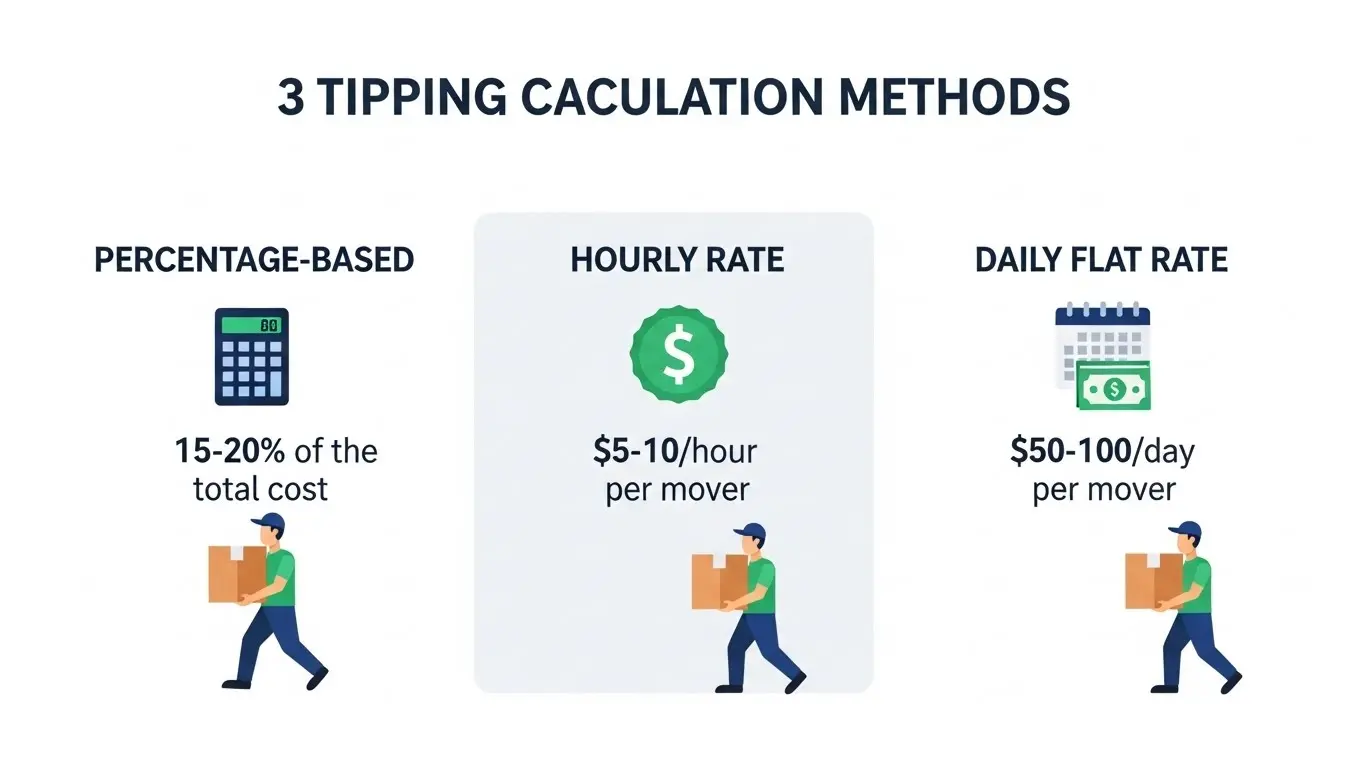
One of the most common questions is, “How much do you tip movers from a moving company?” There are several accepted methods for calculating an appropriate tip.
Three Tipping Calculation Methods
Percentage-Based Tipping
Many people find it easiest to tip based on a percentage of the total moving cost. This method automatically scales with the size and complexity of your move, making it fair for both small and large relocations.
For local or short-distance moves: Tip 15-20% of the total cost. For example, if your move costs $1,000, a tip between $150 and $200 is appropriate.
For long-distance moves: Consider tipping 10-15% of the total cost. Long-distance moves are typically more expensive, so even a lower percentage results in a substantial gratuity that movers appreciate.
Hourly Rate Tipping
Tip $4-5 per hour per mover for satisfactory service, or $8-10 per hour per mover for exceptional service. This method works particularly well for local moves where you’re being charged by the hour, as it directly correlates your tip to the time and effort each mover invests in your relocation.
For example, if you have two movers working for six hours:
- Standard service: 2 movers × 6 hours × $5 = $60 total
- Exceptional service: 2 movers × 6 hours × $8 = $96 total
Daily Flat Rate Tipping
For a straightforward approach, tip a flat rate per mover. This method is simple to calculate and ensures your movers receive fair compensation regardless of minor time variations.
- Half-day move (under 4 hours): $25-40 per mover
- Full-day move (4-8 hours): $50-80 per mover
- Extended day (8+ hours): $75-100 per mover
Many people prefer this approach because it removes the need for calculations and provides a clear budget expectation before moving day arrives.
Special Case: Portable Storage Container Tipping
If you’re using portable storage containers like PODS, STOMO, or U-Pack, tipping expectations are different.
For delivery driver only: Tip $20-35 per delivery for container drop-off and pickup.
For container delivery plus loading help: Tip helpers like regular movers at $5-7 per hour per helper.
Factors That Affect Tip Amounts
When deciding how much to tip movers from a moving company, several factors should influence your decision.
Move Difficulty and Complexity
The physical demands of your move play a significant role in determining tip amounts. Moves involving multiple flights of stairs or no elevator access require considerably more effort than ground-level relocations. Heavy furniture like pianos or gun safes demands special handling skills and extra manpower. Narrow doorways, tight hallways, and historic homes with unique architectural challenges (common in Charleston) can add hours to a move and increase the physical strain on your crew. Each additional challenge requires more time, physical effort, and expertise from your moving crew, warranting a more generous tip.
Quality of Service Provided
Evaluate your movers based on punctuality, professionalism, efficiency, care with belongings, and communication. Movers who excel in these areas deserve recognition through a higher tip. Pay attention to how they handle fragile items, whether they protect your floors and doorways, and if they maintain a positive attitude even when facing unexpected obstacles during the move.
Weather Conditions
Working in extreme weather makes the job more challenging. If your movers work in extreme heat and humidity (especially during Charleston summers), heavy rain, or cold conditions, consider increasing your tip by 10-20%. Weather-related challenges can turn a standard move into an endurance test, and acknowledging this extra effort shows you recognize their dedication.
Additional Services Performed
If movers disassemble furniture, help with last-minute packing, make extra stops, or provide services beyond the standard scope, reward them with a higher tip. These unexpected tasks require flexibility and problem-solving skills that go beyond basic moving duties.
Move Distance and Duration
A quick local move warrants different tipping than a full-day move or multi-day long-distance relocation. For longer moves with different crews, tip each crew appropriately. The length of time movers spend on your relocation directly impacts their physical exhaustion and the value they provide.
When Should You Tip Movers?
End of Move (Most Common)
The most common practice is to tip at the completion of the move, after all belongings are safely delivered. This allows you to assess the full quality of service before determining the final tip amount. Waiting until the end also ensures you’ve seen how carefully your items were handled and whether everything arrived in good condition.
Beginning of Move
Some people tip at the beginning to motivate the crew. While this can work, you won’t know the final quality until the job is complete. If you choose this approach, consider providing a modest amount upfront with the promise of more at the end based on performance.
Multi-Day or Long-Distance Moves
For multi-day moves, provide a modest tip of $20-30 per mover at the end of each day, then reserve a larger tip for the final day. Long-distance moves may involve different crews for loading and unloading, so tip each crew separately. This approach keeps morale high throughout extended moves while giving you flexibility to adjust based on overall performance.
How to Tip Movers: Payment Methods

Cash (Strongly Preferred)
Cash allows movers to receive their gratuity directly and immediately. Get cash 1-2 days before your move and request small bills ($20s, $10s, $5s) for easy distribution. Cash also provides privacy for the movers and avoids any complications with company policies or processing fees.
Credit Card or Company Payment
Some companies allow credit card tipping, which is convenient for business expense documentation. However, ask about their policy in advance, as tips may not reach movers immediately. Some companies may also deduct processing fees or distribute tips differently than you intended.
Digital Payments (Venmo, CashApp, Zelle)
Digital payment methods are increasingly common in 2025. Ask if movers accept these, but always have cash as backup. Younger movers particularly appreciate the convenience of instant digital transfers, and this method provides a record of your gratuity.
Individual vs. Team Tipping
Tip each mover individually rather than giving a lump sum to the team leader. Hand the tip to each person individually with a personal thank you. This ensures each worker receives their fair share and allows you to acknowledge their individual contributions to your move.
When to Tip More
Consider tipping an extra $10-30 per mover when your crew arrives early or exactly on time, completes the job faster than expected, or handles unexpected problems with professionalism and grace. Situations involving multiple flights of stairs, extremely heavy items like pianos or gun safes, or working during Charleston’s hot summer months all warrant additional appreciation. Weather challenges like working through rain or extreme heat can turn a standard move into an endurance test, and recognizing this extra effort shows you value their dedication and hard work.
When Not to Tip (Or Tip Less)
Reducing or withholding a tip is justified when movers arrive very late without communication, handle belongings carelessly, damage items due to negligence, display rude or unprofessional behavior, or work significantly slower than reasonable. If you experience poor service, communicate your concerns with the crew leader during the move, document any issues with photos, contact the company’s management, and leave an honest review to help future customers make informed decisions.
Non-Monetary Ways to Show Appreciation
Providing Refreshments
Offer water, sports drinks, coffee for morning moves, and snacks. For full-day moves, provide lunch like pizza or sandwiches. Never offer alcohol during the move. Keeping your movers hydrated and energized, especially during physically demanding relocations, can actually improve efficiency and shows you care about their wellbeing.
Writing Positive Reviews
Write detailed reviews on Google, Yelp, Facebook, and the company’s website. Mention specific movers by name and highlight what they did well. Online reviews help moving companies attract new business and can lead to bonuses or recognition for exceptional crew members.
Other Gestures
Provide bathroom access, offer sincere verbal thanks, recommend the company to friends, and share positive experiences on social media. Simple acts of kindness like allowing breaks, offering shade on hot days, or expressing genuine appreciation throughout the move can make movers feel valued even beyond monetary tips.
Conclusion: Tipping Movers the Right Way
Are you supposed to tip movers from a moving company? Yes – tipping is customary and expected, though not legally required. By following these guidelines, you can ensure you’re tipping appropriately and showing genuine appreciation. The standard tipping range is 15-20% of total cost or $50-100 per mover per day, with cash being the preferred payment method. Always tip after assessing service quality and adjust for factors like difficulty, weather conditions, and exceptional service. For portable storage delivery, tip drivers $20-35 per delivery. Combining monetary tips with refreshments and positive reviews creates the most meaningful appreciation.
Moving is stressful, and professional movers make it manageable. Whether you’re working with a full-service company or receiving a portable storage container delivery in Charleston, fair tipping ensures quality service and supports hardworking professionals. When you show appreciation for exceptional service, you’re contributing to a culture of professionalism in the moving industry.
Need Moving or Storage Solutions?
Whether you’re planning a local Charleston move or need temporary storage, STOMO Storage is here to help. Our portable containers give you the flexibility to pack at your own pace, and our professional delivery drivers (who deserve those tips!) ensure safe placement at your location, request your free quote to start planning your stress-free move.
Frequently Asked Questions
Is it rude not to tip movers?
If you received good service, not tipping is generally considered rude and goes against industry customs. However, withholding a tip is justified for poor service. Just make sure to communicate your concerns to the company so they can address the issues.
Should I tip if my company is paying for the move?
Yes, you should still tip personally. The movers did the physical work to relocate your belongings regardless of who pays the bill. Corporate moves are no exception to tipping etiquette.
Can I tip movers with a credit card?
Some companies allow this, but cash is strongly preferred. If you want to use a credit card, ask about their policy in advance and verify the tip will actually reach the movers without being delayed or reduced by processing fees.
How much to tip movers in Charleston, SC?
Follow the standard 15-20% guideline or $50-80 per mover for a full day. During summer months (May through September), consider adding an extra $15-20 per mover to account for the extreme heat and humidity that makes an already difficult job even more challenging.
Do I tip portable storage delivery drivers?
Yes, tip $20-35 per trip for delivery drivers who drop off or pick up containers. If they also help you load the container, tip them at the standard hourly rate of $5-7 per hour just like traditional movers.
What if I can’t afford the recommended tip amount?
Give what you can afford. Even $15-20 per mover shows appreciation and acknowledges their hard work. You can also supplement a smaller cash tip with refreshments, snacks, and a positive review that helps them professionally.