

If you’re using a portable storage container in South Carolina, moisture control isn’t optional, it’s essential. With humidity levels regularly topping 80% in Charleston and the Lowcountry, condensation can quickly damage furniture, electronics, clothing, and documents. Whether you’re storing items during a move, home renovation, or military deployment, protecting your belongings from moisture requires a strategic approach.

At STOMO Storage, we’ve helped thousands of South Carolina families safely store their possessions through our portable storage and moving services. This guide shares the most effective methods for keeping your storage container dry and your items protected, with specific strategies for Charleston, Columbia, and Myrtle Beach’s unique climate challenges.
Understanding Moisture in Storage Containers
Condensation forms when warm, humid air inside your container comes into contact with cooler surfaces, typically the walls and ceiling. Think of it like a cold drink on a hot day: water droplets form on the outside of the glass. The same process happens inside storage containers, especially during South Carolina’s humid summers or when temperatures fluctuate between day and night.
Several factors influence moisture levels in portable storage containers. South Carolina’s coastal location brings persistent humidity, with Charleston averaging 75-85% humidity during summer months. Inland areas like Columbia face intense heat combined with humidity. The items you store also matter: wood furniture, fabrics, cardboard boxes, and even fresh lumber all release moisture into the air.
Portable storage containers face unique challenges compared to traditional storage units. They sit directly on the ground (where moisture rises), experience direct sun exposure, and may not have climate control. However, with proper preparation and moisture prevention techniques, you can safely store items for weeks or months without damage. For residents in high-humidity coastal areas like Charleston or Myrtle Beach, proper container setup becomes even more critical due to constant moisture exposure.
8 Proven Methods to Prevent Moisture
1. Prepare Items Before Loading
Never store anything damp or dirty. Clean all items before packing dirt and organic matter hold moisture and promote mold growth. If you wash clothing before storage, verify it’s completely dry by feeling inside pockets and seams. Athletic equipment, beach gear, and camping supplies need at least 24-48 hours of air drying. Furniture should be wiped down and allowed to dry completely if you’ve cleaned it. For items coming from humid areas (like basements or garages), let them acclimate to drier conditions for a day before packing. This simple step eliminates a major source of container moisture from the start.
2. Use Desiccants Strategically
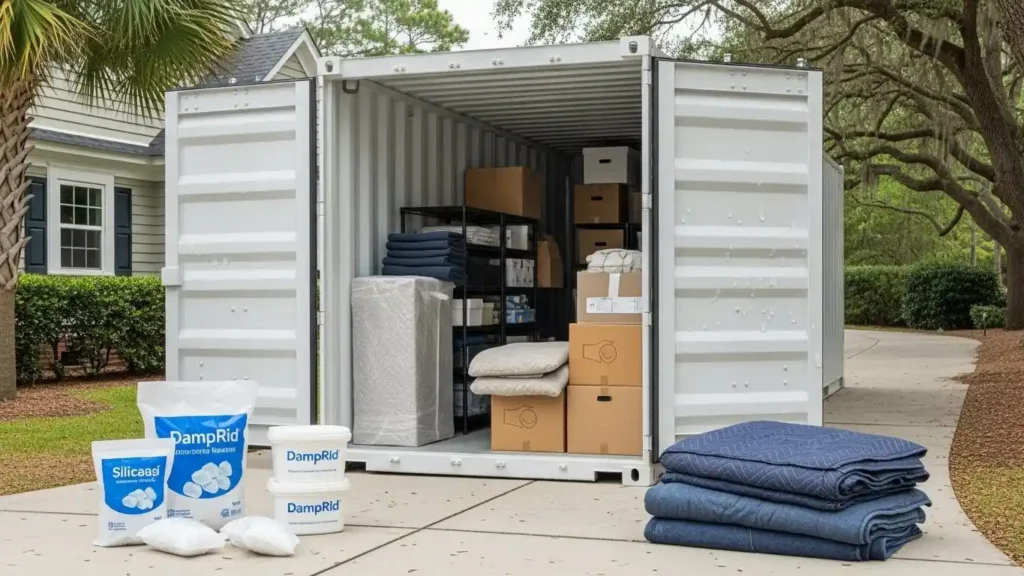
Desiccants are moisture-absorbing materials that pull humidity from the air. The most common types include silica gel packets (like those in shoe boxes), calcium chloride crystals (sold as DampRid), and activated charcoal bags. Use approximately one moisture absorber pack per 50 square feet of container space for a standard 8×10 container, that means 1-2 large containers or 4-6 hanging packets.
Place desiccants strategically: corners where air circulation is limited, near moisture-sensitive items, and on higher shelves where warm, humid air naturally rises. Check them every 3-4 weeks during summer months, replacing when saturated. In South Carolina’s humid climate, desiccants are your first line of defense and worth the $20-40 investment for proper protection.
3. Pack with Protective Materials
How you wrap items matters as much as what you use. Furniture requires moving blankets or furniture pads first, then furniture bags or mattress covers never put plastic wrap directly against wood surfaces, as it traps moisture and causes damage. For mattresses and upholstered furniture, use breathable mattress bags designed for storage, not plastic tarps.
Electronics need extra protection: wrap in bubble wrap, place silica gel packets inside the wrapping, and store in plastic bins rather than cardboard boxes. Clothing should go into wardrobe boxes or, for long-term storage, vacuum-sealed bags (though these should be monitored, as over-compression can damage some fabrics). Dishes and fragile items are safest in plastic containers with tight-fitting lids, using packing paper rather than newspaper, which can transfer ink and hold moisture.
4. Create Proper Ventilation
Air circulation is critical for moisture control. Even slight airflow prevents stagnant, humid pockets where condensation forms. If possible, open your container doors for 15-30 minutes every week to exchange the air. Do this during low-humidity times (early morning or after a cold front passes). Many STOMO containers feature ventilation by design, but you can enhance it by avoiding blocking vents with items.
For containers stored in shaded areas with good airflow, natural ventilation may be sufficient. In extremely humid periods (summer months near the coast), consider adding a battery-powered fan for circulation. Position items in the container to allow air channels don’t pack everything tightly against walls, and leave a small center aisle if space permits.
5. Use Vapor Barriers for Long-Term Storage
For storage lasting longer than 3 months, vapor barriers add an extra layer of protection. Heavy-duty plastic sheeting (6 mil thickness) placed on the container floor prevents ground moisture from rising into your items. This is especially important if your container sits directly on soil, gravel, or grass.
Vapor barriers work by creating a physical barrier between moisture sources and your belongings. While not necessary for short-term storage (1-4 weeks), they become valuable for renovations, military deployments, or extended moves. A roll of 6 mil plastic costs $30-50 and covers multiple containers, making it cost-effective for long-term protection. Simply lay it flat on the floor before loading, overlapping seams by 12 inches.
6. Strategic Container Loading
Load your container with moisture in mind. Place the most moisture-resistant items (plastic bins, metal items, sealed containers) on the bottom layer these can withstand any ground moisture that penetrates upward. Keep furniture and boxes at least 2-3 inches away from container walls where condensation typically forms.
Create vertical air channels by arranging boxes and furniture in rows rather than filling every inch. This allows air circulation throughout the container. Store moisture-sensitive items (electronics, photos, documents) in the middle of the container, surrounded by other items that insulate them from temperature extremes at walls and ceiling. If you must stack items high, place lighter, less moisture-sensitive boxes on top where any ceiling condensation might drip.
7. Choose the Right Container Location
Where your container sits affects moisture levels significantly. Request placement in shaded areas if possible direct sun heats the container, creating more temperature differential and potential condensation. Ensure the ground is level and well-drained; standing water beneath your container guarantees moisture problems.
Choose locations with good air circulation around the container to avoid tucking it into tight spaces between buildings where air stagnates. In Charleston and coastal areas, positioning the container opening away from prevailing winds (which carry moisture-laden sea air) helps. If your property allows, placing containers on a slight elevation prevents water from pooling underneath during heavy rains, which are common in South Carolina summers.
8. Monitor and Maintain
Set a regular inspection schedule based on your storage timeframe. For short-term storage (under 6 weeks), check once before closing and once midway through. For longer storage, inspect every 2-3 weeks during humid months, monthly during drier seasons.
During inspections, look for these warning signs: musty odors (indicate mold starting), visible moisture on walls or items, saturated desiccants needing replacement, or any items that feel damp. Address problems immediately remove affected items, increase ventilation, add more desiccants, or relocate the container if ground moisture is the culprit. A small moisture problem caught early takes minutes to fix; extensive mold damage requires professional remediation.
Item-Specific Protection Tips

Furniture: Wrap wood furniture in moving blankets, then cover with furniture bags. Leather needs special conditioning before storage and should never touch plastic directly. Remove drawers and pack separately to prevent warping.
Electronics: Power down completely, wrap in anti-static bubble wrap, place silica gel packets inside the wrapping, and store in plastic bins. Remove batteries from remotes and devices to prevent corrosion.
Clothing & Textiles: Wash and dry completely before packing. Use wardrobe boxes for hanging items or vacuum-sealed bags for seasonal clothing. Add cedar blocks or lavender sachets for natural moisture control and pest prevention.
Documents & Photos: Never use cardboard boxes for long-term document storage paper absorbs moisture. Use plastic file boxes with tight lids, add silica gel packets, and store away from container walls.
Mattresses: Invest in proper mattress bags designed for storage. Standard plastic sheeting traps moisture against the fabric. Store mattresses flat if possible to prevent sagging.
South Carolina Climate Considerations
Charleston & Lowcountry: With coastal humidity averaging 75-85% in summer, use double the typical desiccant amount. Check containers weekly during June-September. Salt air accelerates metal corrosion and protects metal items with additional wrapping.
Columbia: Inland heat combined with humidity creates extreme conditions. Focus on ventilation and shade. Temperature swings between day and night increase condensation insulation helps stabilize internal temperature.
Myrtle Beach: Beach proximity means persistent moisture. Vapor barriers are essential for ground-level containers. Consider extra protection for fabric items, which absorb salt air moisture.
Hurricane Season (June-November): Secure containers, elevate items off the floor if flooding is possible, and check containers immediately after storms to address any moisture that entered during heavy rain.
Common Mistakes to Avoid
Don’t store items while they’re still damp so that moisture has nowhere to go except into your other belongings. Never put plastic wrap directly against wood furniture; it traps moisture and causes finish damage. Avoid overpacking your container so tightly that air can’t circulate, leaving some breathing room. Remember to replace desiccants regularly saturated packets stop working. Finally, don’t ignore ground moisture; containers sitting on wet ground will fight a losing battle against humidity.
How STOMO Helps Protect Your Belongings
STOMO’s ground-level portable storage containers offer natural ventilation advantages over elevated units. Our weather-resistant design withstands South Carolina’s climate challenges, from coastal storms to inland heat. As a local company serving Charleston, Columbia, and Myrtle Beach, we understand the unique moisture challenges in each area. We provide flexible container placement to avoid problematic locations, and our team offers guidance on proper packing and moisture prevention. When you rent from STOMO, you’re working with storage experts who know South Carolina’s climate and how to protect your belongings from it.
Ready to store with confidence? Contact STOMO Storage to get free quote for portable container delivery in Myrtle Beach, Columbia, or Charleston. Our team will help you choose the right container and location for optimal moisture protection. Get a free quote today or call us to discuss your specific storage needs.
Frequently Asked Questions
How much do desiccants cost?
Basic moisture absorbers run $5-15 per container, with refills at $3-8. For an average container, budget $20-40 for complete moisture protection throughout your storage period.
Should I use climate-controlled storage instead?
For most household items stored under 6 months with proper moisture prevention, climate control isn’t necessary. Save money by following these techniques. Climate control makes sense for valuable antiques, fine art, or long-term storage of sensitive electronics.
What if I notice moisture during storage?
Act immediately. Remove damp items, increase ventilation by opening doors, add fresh desiccants, and check for leaks or ground moisture. Address the source before mold develops.
Is it better to store in summer or winter?
Neither season is inherently better, both have challenges. Summer brings high humidity but consistent temperatures. Winter has lower humidity but bigger temperature swings. Use appropriate moisture prevention for the season.
Can I use regular plastic sheeting for furniture?
No, use of breathable furniture covers or moving blankets. Regular plastic traps moisture against surfaces, causing more damage than protection.
About The Author